
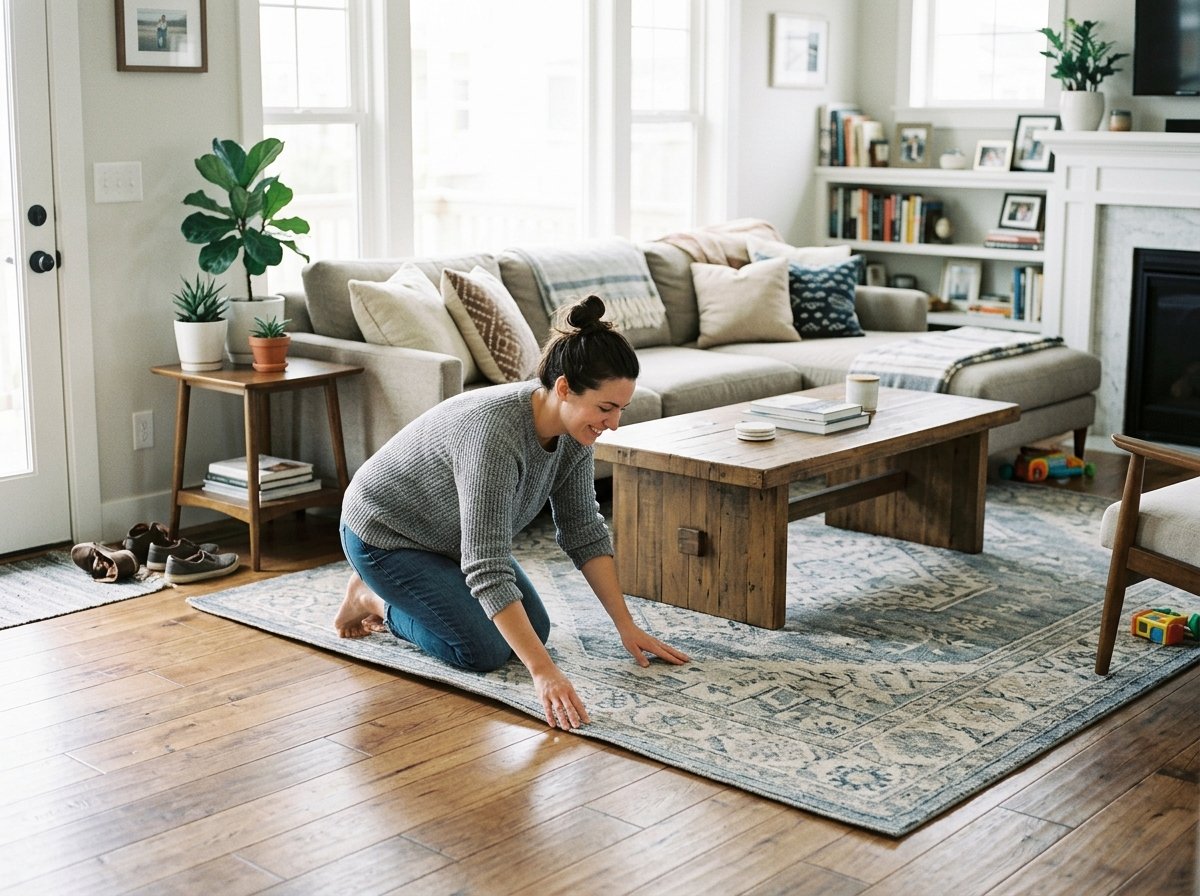
My first “nice” living room rug lasted four months before it looked like it had been through a war — matted traffic paths in front of the couch, a wine stain near the coffee table I never fully got out, and fringe my dog had turned into confetti.
I’d bought it because I liked the color, and I never once thought about whether it could actually handle daily use. That’s the mistake almost everyone makes with a living room rug, and it’s an expensive one to make twice.
The living room is the highest-traffic room in most homes — it’s where people walk through constantly, where kids play on the floor, where pets nap and shed and occasionally have accidents, and where you’re dragging a coffee table around every time you rearrange furniture.
A rug that looks gorgeous in a bedroom photo can fall apart fast under that kind of daily wear, and the fiber and construction matter a lot more than the pattern does.
Here’s what I’ve actually learned about picking rugs for high-traffic living rooms — by material, since that’s the single biggest factor in whether a rug survives your actual life or just your Pinterest board.

Rug Materials Compared for Durability
This is the short version before you scroll through the details on each — how the common living room rug materials stack up specifically for heavy daily use.
| Material | Durability | Stain Resistance | Price Range (5×8) |
|---|---|---|---|
| Wool | Excellent, resists crushing | Good, naturally soil-resistant | $250–$700+ |
| Polypropylene (synthetic) | Very good | Excellent, easy to spot clean | $60–$180 |
| Nylon | Excellent, most crush-resistant | Good with treatment | $100–$300 |
| Jute / sisal | Moderate, wears with heavy foot traffic | Poor, stains absorb fast | $80–$250 |
| Machine-washable synthetic blends | Good for low-medium pile | Excellent, made for it | $70–$220 |
Wool: The Long-Term Investment Pick

Wool is the material real high-end rug shops push you toward for good reason — the individual fibers have a natural crimp that lets them bounce back after being crushed, which is exactly what happens in the paths where people actually walk. A synthetic rug in a busy walkway will show flattened traffic lines within a year; a good wool one resists that for a decade or more.
The trade-off is obvious: it’s the most expensive option on this list, sometimes by a wide margin. It’s worth it if you’re planning to stay in the space for years and can treat it as a one-time purchase rather than something you’ll replace and re-buy every couple of years.
Pro tip: Wool sheds loose fibers heavily for the first few weeks — that’s normal, not a defect, and it’s the single most common reason people think they bought a bad rug when they actually just need to vacuum more in month one.
Polypropylene: The Budget-Friendly Workhorse
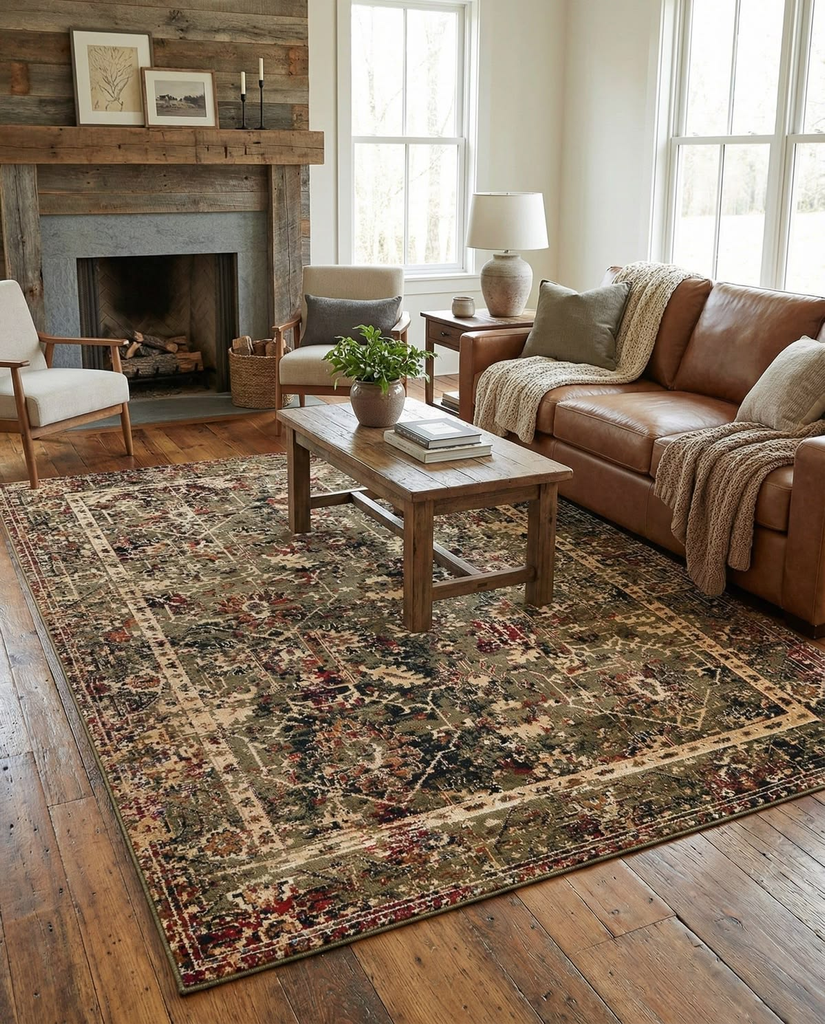
This is what most affordable living room rugs are actually made of, and it’s a genuinely good choice for high traffic, not just a cheap compromise. Polypropylene fibers don’t absorb liquid the way natural fibers do, so spills sit on the surface long enough to blot up instead of soaking straight into the backing.
My sister has two kids and a golden retriever, and her living room rug is polypropylene specifically because of that — she’s blotted up juice, dog vomit, and one memorable crayon incident, and none of it left a permanent mark. It’s not going to feel as soft underfoot as wool, and it doesn’t have quite the same visual depth in person, but for a household with pets or young kids it’s usually the more practical call.
Pro tip: Not all polypropylene is equal — look for “heat-set” or “solution-dyed” in the description. Solution-dyed means the color is added to the fiber before it’s spun, which makes it far more fade- and stain-resistant than a rug that’s dyed after weaving.
Nylon: The Middle Ground for Heavy Foot Traffic
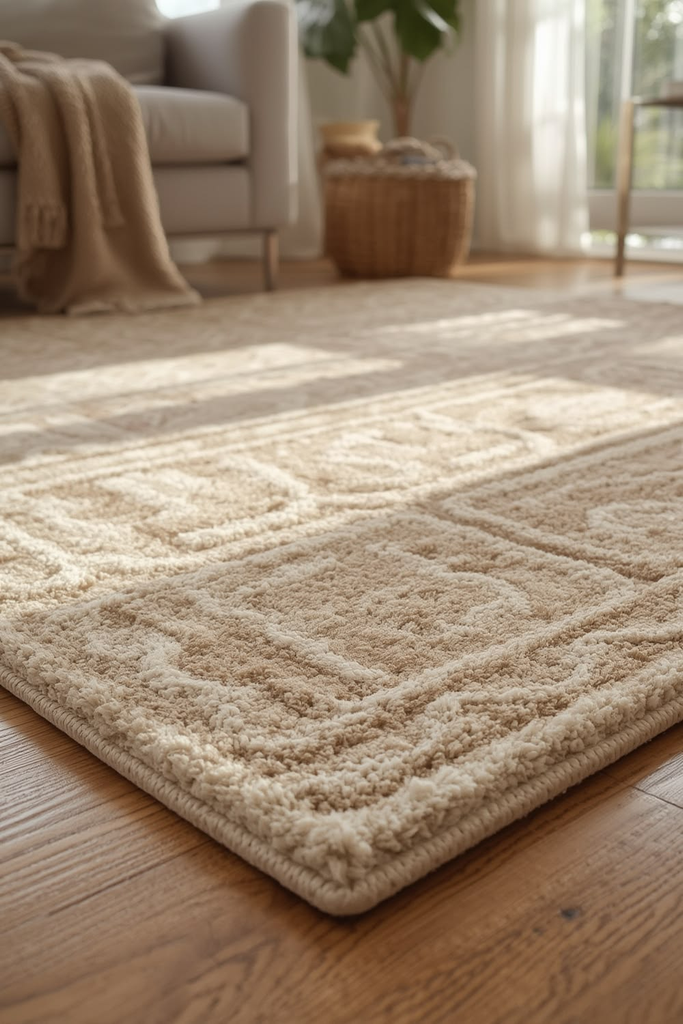
If wool feels like too much money and polypropylene feels like too much of a compromise, nylon is genuinely the middle option, and it’s the fiber commercial spaces like offices and hotels use for exactly this reason — it holds up to constant foot traffic better than almost anything else without wool’s price tag.
It’s not naturally as stain-resistant as polypropylene, so most nylon rugs sold for home use come with a stain treatment applied. That treatment does wear off over years of cleaning, which is worth knowing before you assume a nylon rug will stay stain-proof forever.
Jute and Sisal: Beautiful, But Not for Every High-Traffic Room
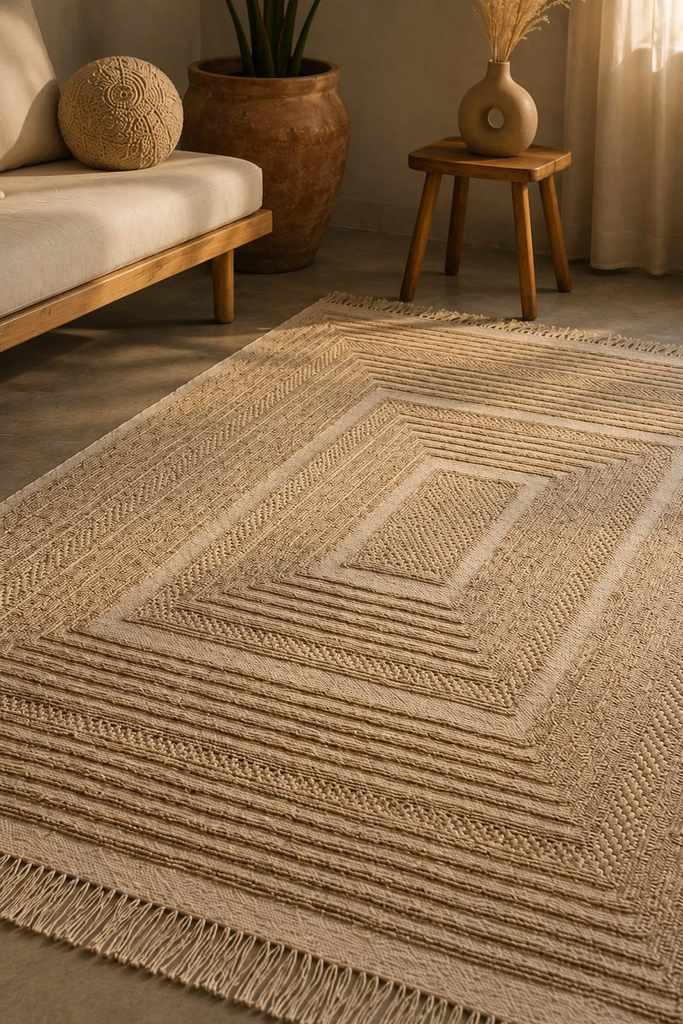
Natural fiber rugs like jute and sisal have that texture everyone’s drawn to in photos, and they genuinely do look more expensive than they usually are. But they’re the one material on this list I’d actually caution against for the heaviest-traffic rooms — the fibers are stiffer and more absorbent, so they crush down faster underfoot and stain more permanently than the synthetic options.
I still use a jute rug in my living room, but it’s layered under a smaller washable accent rug in the specific spot where people actually walk and where my dog’s water bowl sits — the jute handles the edges and the low-traffic zones, and the layered piece takes the actual abuse.
Pro tip: If you love the jute look but have pets or kids, look for a jute-and-wool or jute-and-synthetic blend — you get the texture without the fiber being 100% absorbent, which cuts down on permanent staining a lot.
Machine-Washable Rugs: The Newer Option Worth Considering
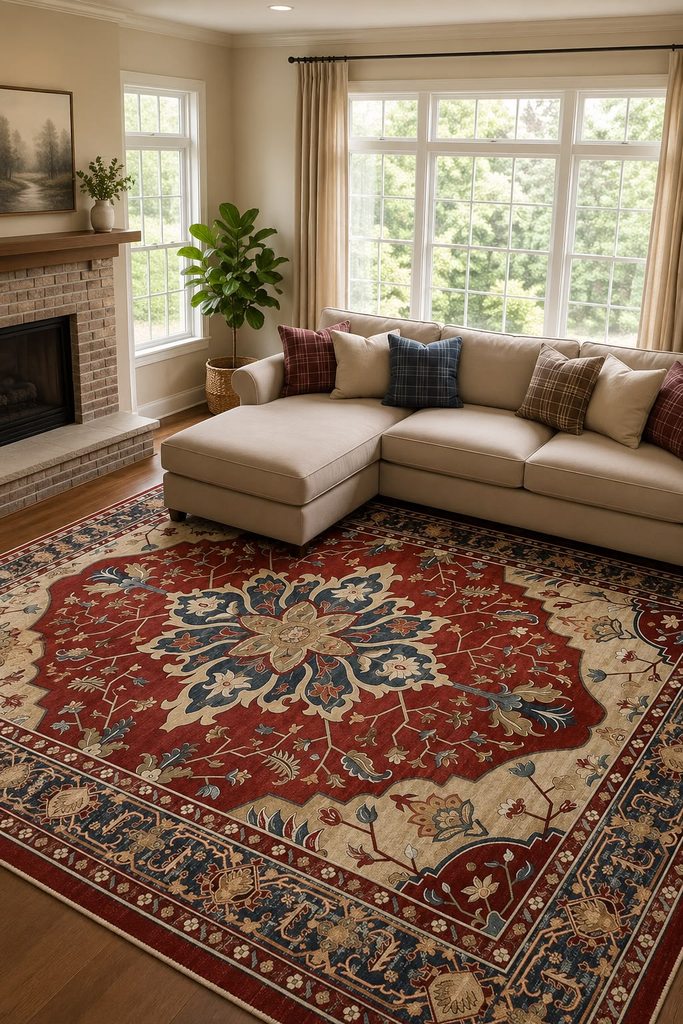
These have gotten genuinely good over the last few years, and I think they’re underrated for high-traffic living rooms specifically because of what they solve: you can actually deep clean the entire rug instead of just spot-treating it. A low-pile machine-washable rug can go through a large-capacity or laundromat washer when it needs it, which none of the other materials on this list can do.
A reader commented on one of my apartment posts that she switched her whole living room to a washable rug after her cat had a habit of tracking litter across it — she said being able to actually wash the thing instead of vacuuming around the problem changed how she felt about having a light-colored rug at all.
The trade-off is pile height — most washable rugs are low pile or flatweave, so if you want something plush underfoot, this isn’t it. They’re also not built for the heaviest furniture; a couch or coffee table sitting on the same spot for years can compress the fibers unevenly in a way that doesn’t bounce back the way wool does.
Pile Height and Pattern Actually Matter More Than People Think
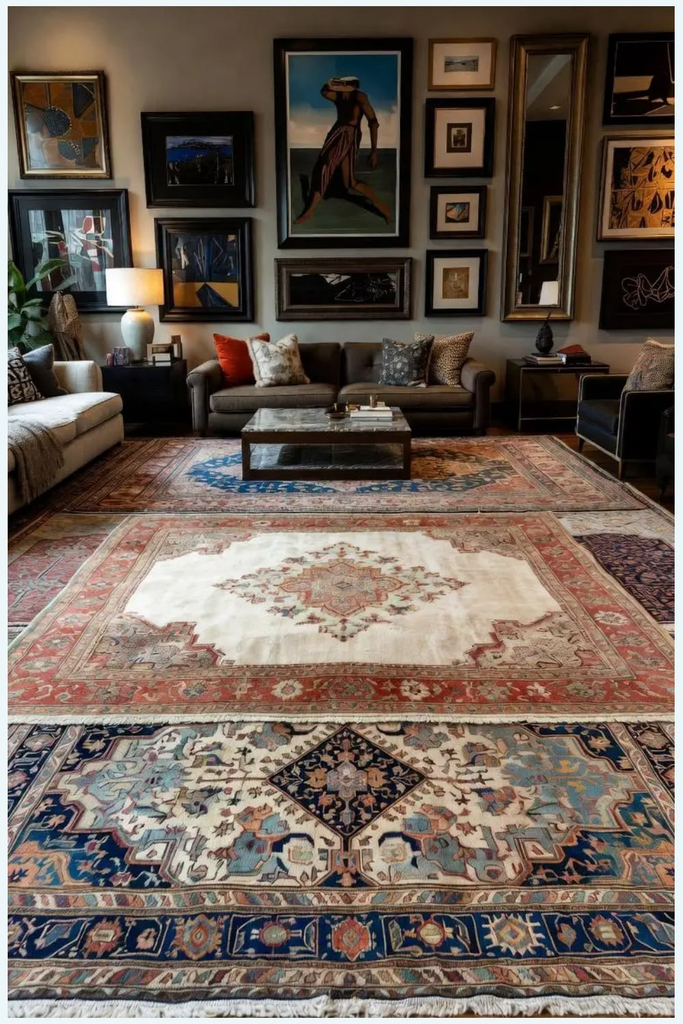
Beyond material, two other factors change how well a rug handles daily wear. Low and medium pile rugs (under half an inch) hold up better in high-traffic areas than plush, high-pile rugs — a deep pile looks luxurious but crushes and shows traffic patterns faster, and it’s harder to vacuum debris out of.
Pattern and color do real work too, not just aesthetic work. A busy pattern or a mid-tone color with some variation hides everyday dirt, pet hair, and minor stains far better than a solid light color — I learned this the hard way with a cream rug that showed every crumb within a day of vacuuming.
Don’t Skip the Rug Pad
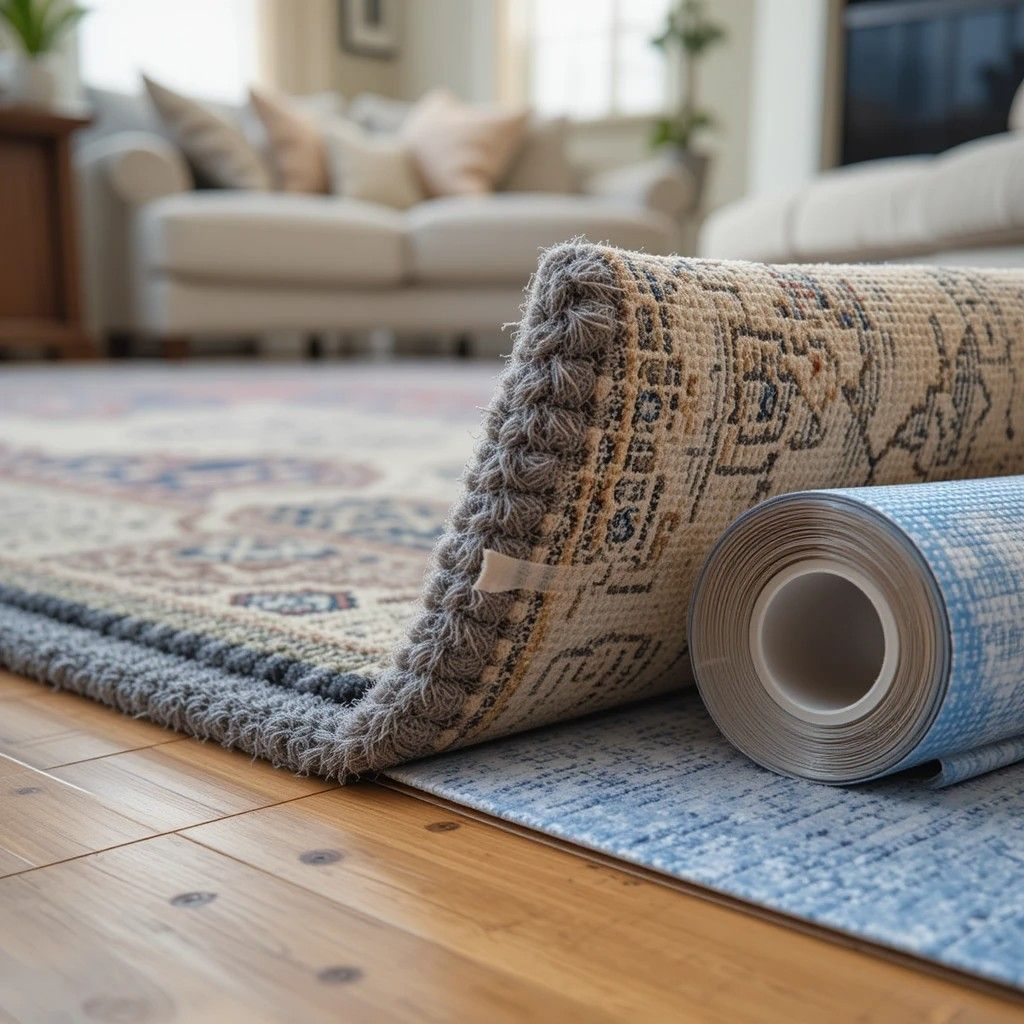
This is the part that gets left out of most rug shopping guides, and it directly affects how long any of the materials above actually last. A good rug pad reduces the friction and shifting that wears down fibers from underneath, cushions the rug so it doesn’t crush as fast, and keeps it from sliding around under high foot traffic, which is its own safety issue.
Budget roughly $20–$50 for a rug pad sized to your rug, and treat it as part of the rug’s actual cost, not an optional add-on. A great durable rug on a bare hardwood floor without a pad will still wear out faster than a mediocre rug that’s properly padded.
What I’d Buy First If I Were Starting Over
If I were furnishing a high-traffic living room from scratch today, knowing what I know now, I’d go with a solution-dyed polypropylene or a nylon rug in a medium pile with some pattern to it, plus a real rug pad underneath from day one — not the cream wool one I actually bought first and slowly ruined.
Wool is still the better rug on paper, but it only wins if your household and your budget can actually support it.
For everyone else dealing with kids, pets, or just a lot of daily foot traffic, the “practical” material is the one that’ll still look decent in three years, which matters more than which one looks best in the store.


Leave a Reply