
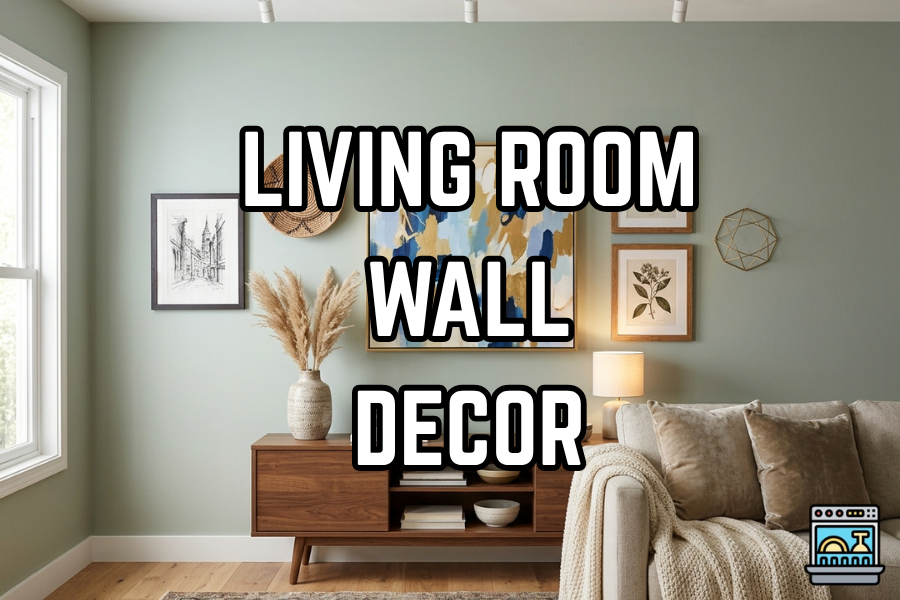
I had a blank wall above my couch for almost a year after moving into my first apartment, not because I didn’t have ideas, but because I kept buying single pieces of art that were either too small (swimming in all that empty space, looking like an afterthought) or too big for the actual budget I had at the time.
It took an embarrassingly long scroll through way too many living rooms online before I figured out the actual rule that solved it: the wall space above your couch isn’t one decision, it’s a proportion problem, and once I measured instead of guessing, everything got a lot easier.
If you’re staring at that same blank stretch of wall above your couch, you’re dealing with one of the most common and most avoided decorating decisions in a living room — common because almost every couch has wall space above it, avoided because it’s genuinely easy to get the scale wrong, spend money on the wrong size piece, and end up with something that looks either sparse or crowded no matter how nice the individual item is.
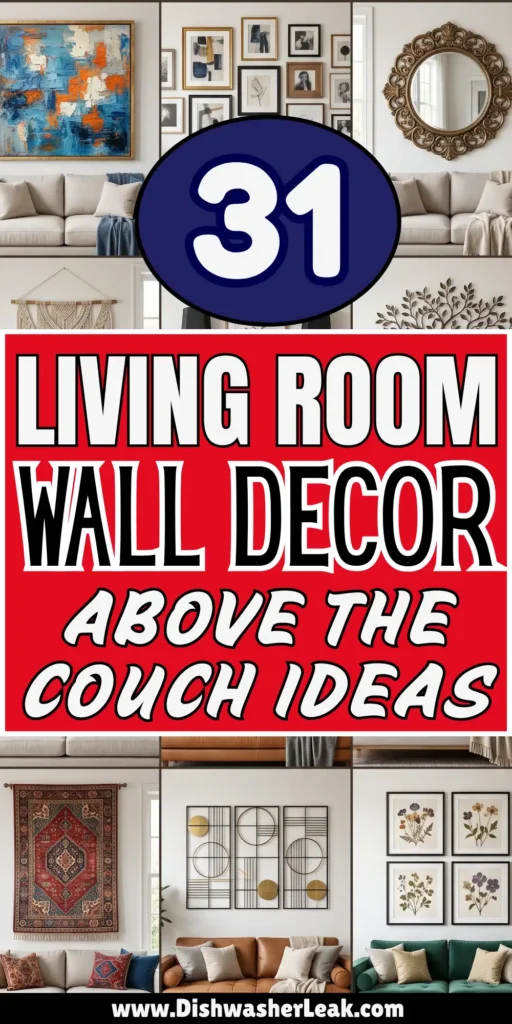
This list runs through 31 living room wall decor ideas specifically for above the couch, grouped by approach — art and gallery layouts, mirrors, shelving, textiles, and a few less obvious functional options — because the right choice depends a lot on your couch size, your ceiling height, and honestly how much you want to spend versus how big a visual impact you’re going for.
I’ll flag sizing guidance throughout, since getting the proportions right matters more than which specific idea you pick.
The Sizing Rule Nobody Explains Clearly Enough
Before any specific idea: your wall decor above the couch should generally span about two-thirds to three-quarters of the couch’s total width, and sit roughly 6 to 12 inches above the top of the couch back (or the top of any pillows you keep stacked there). Go much narrower than two-thirds and it reads as too small and floating; go wider than the couch itself and it can look like it’s fighting the furniture instead of anchoring it.
Pro tip: Before buying or hanging anything, tape the actual dimensions of what you’re considering onto the wall using painter’s tape — a rough rectangle for a single large piece, or the individual outlines for a gallery layout — and live with it for a day or two. I skipped this step on my first real attempt at a gallery wall and ended up with nail holes in three spots that didn’t end up part of the final layout, which a $2 roll of tape would’ve completely prevented.
Single Statement Art Pieces
1. One large-scale canvas or framed print
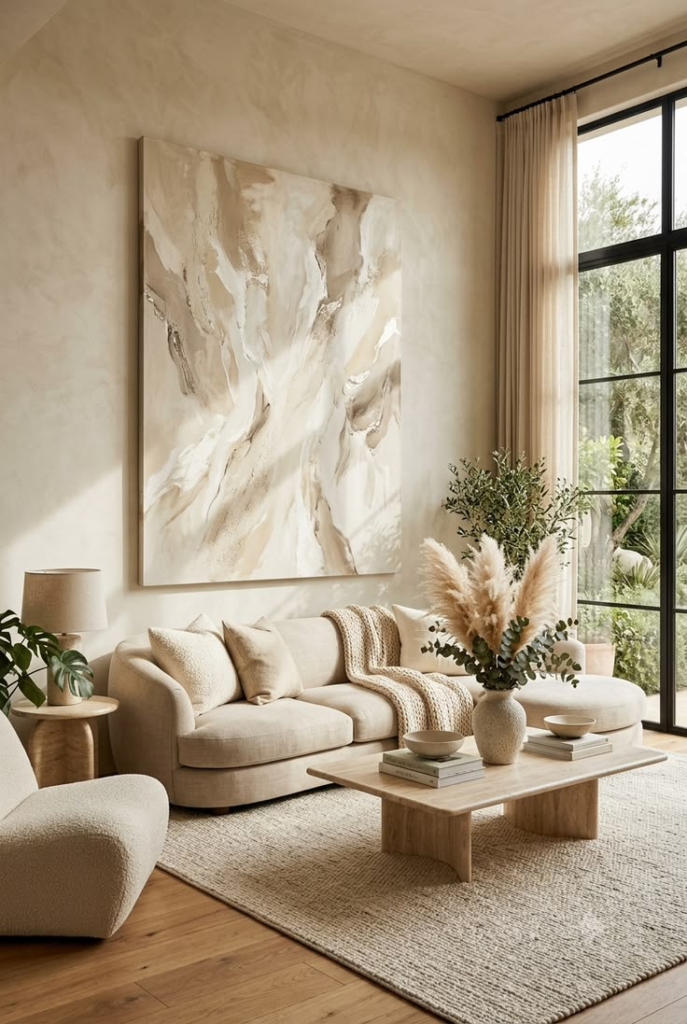
The most straightforward option — one piece sized to hit that two-thirds-to-three-quarters width rule, in a color palette or subject that works with your existing room. This is genuinely the lowest-effort option in terms of hanging (one item, one set of measurements) but it does mean the piece itself needs to carry the whole wall, so it’s worth spending a little more on this one if you’re only buying a single item.
2. Oversized abstract art
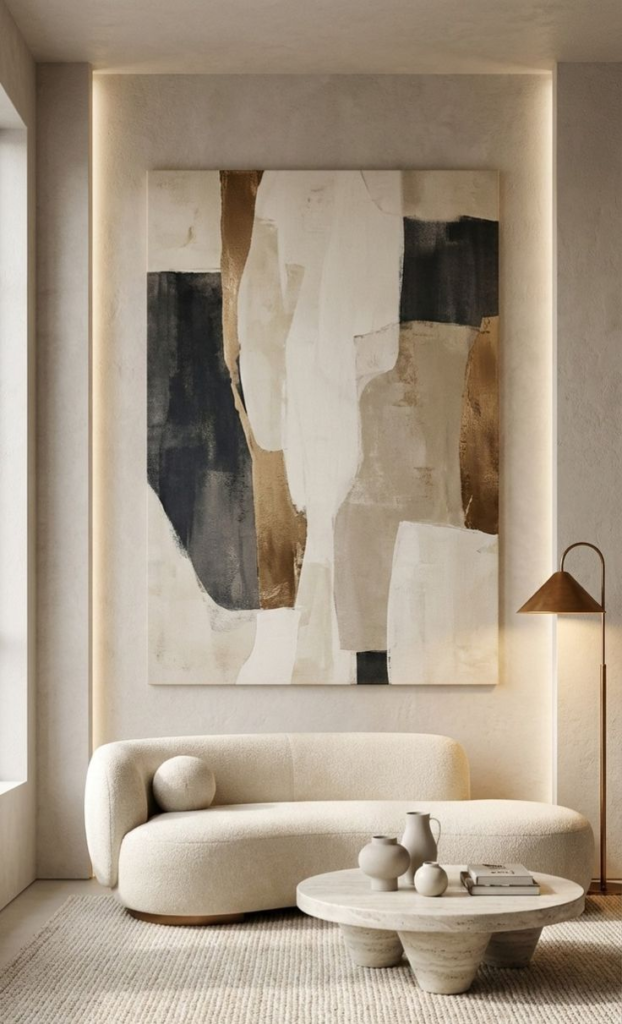
Abstract pieces specifically tend to work well at a large scale above a couch because they don’t need to be “read” up close the way a detailed landscape or portrait does — you can appreciate the color and movement from across the room, which is exactly the distance you’ll actually be viewing it from most of the time.
3. A single framed textile or tapestry
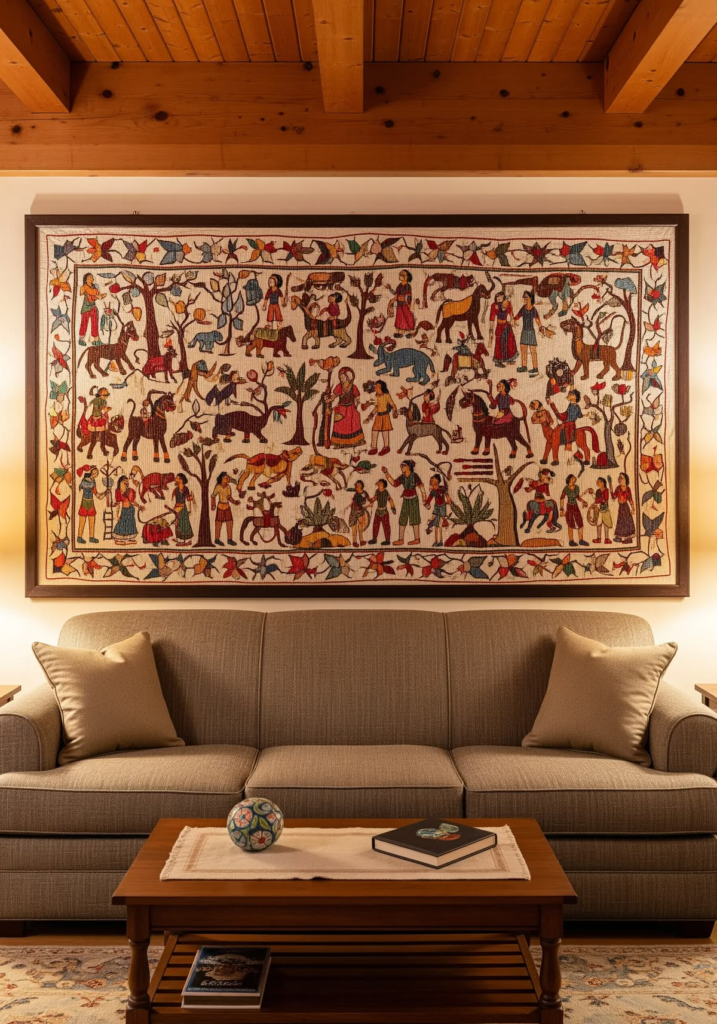
Instead of a canvas, a framed piece of fabric — a vintage textile, a woven piece, even a nicely bordered scarf — gives you texture that flat canvas prints don’t have. This is a genuinely good option if you want something with more visual depth without committing to a full gallery wall’s worth of separate framing and hanging.
4. A large-scale photograph, personal or purchased
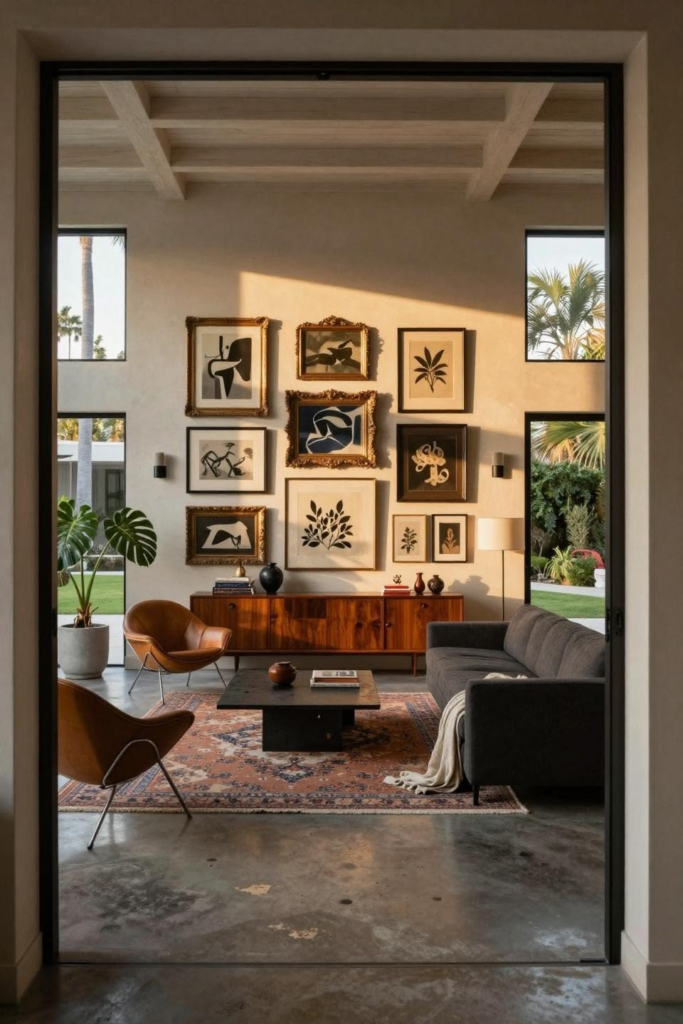
Either a blown-up personal photo (a landscape you took, not a family portrait — those tend to work better in other parts of the house) or a purchased large-format photography print. My friend Alina did this with a photo she took on a hiking trip, printed at 36×48 inches, and it cost less than a comparable purchased canvas print would have while being something genuinely hers.
Gallery Wall Layouts
5. Symmetrical grid gallery wall
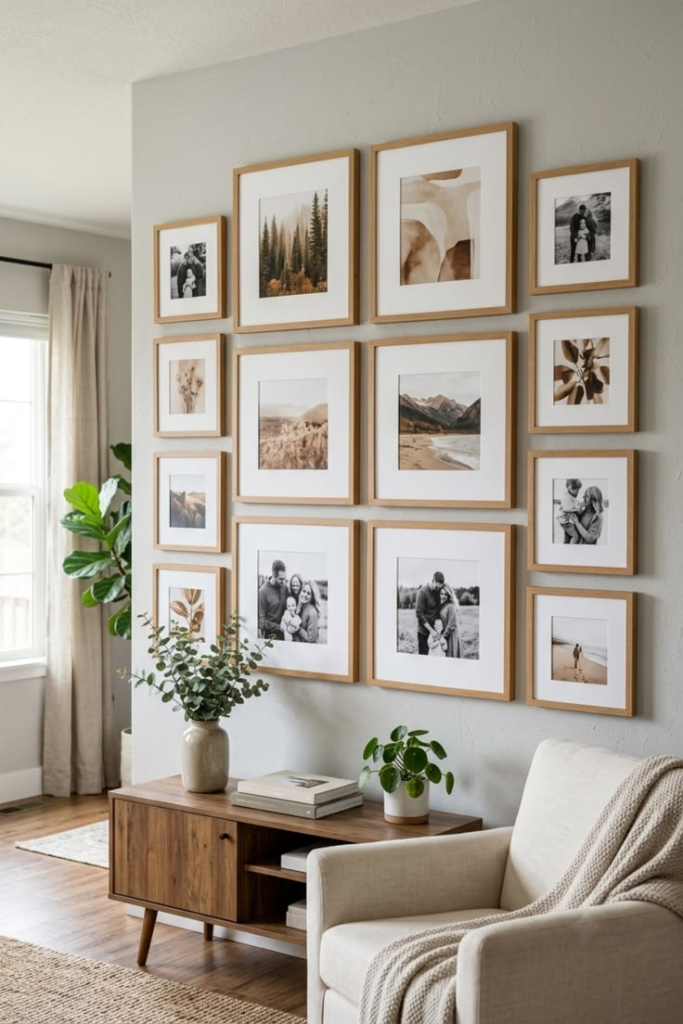
Evenly spaced, same-size frames arranged in a clean grid pattern — 2×3, 3×3, or similar. This is the most forgiving gallery layout for beginners because the math is straightforward and consistent spacing does most of the visual work for you, without needing an eye for asymmetrical balance.
6. Organic, asymmetrical gallery wall
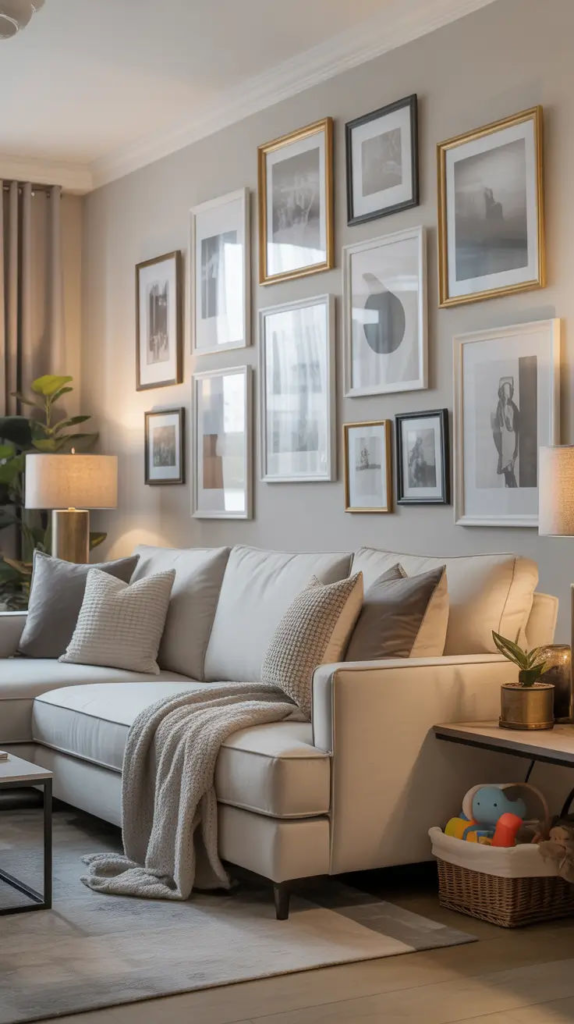
Mixed frame sizes and styles arranged in a more free-form, collected-over-time layout rather than a strict grid. This looks more personal and less “matched set,” but it’s genuinely harder to get right on the first try — I’d recommend the painter’s-tape trick even more strongly for this layout than the grid version, since there’s no formula to fall back on if it’s not working.
7. Gallery wall with one larger anchor piece and smaller surrounding pieces
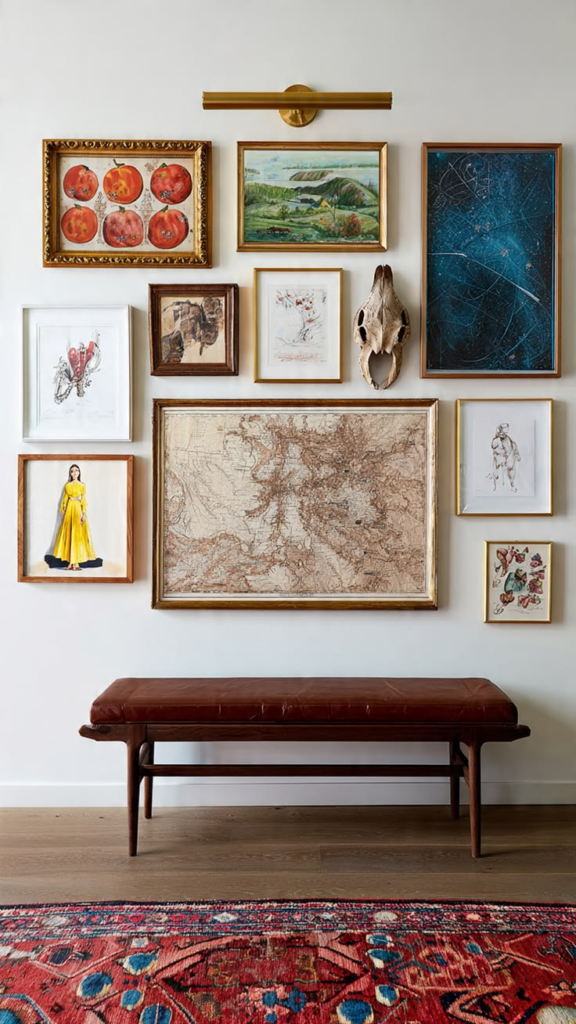
A hybrid approach — one noticeably larger piece as the visual center, with smaller frames or art arranged around it. This gives you some of the visual interest of a full gallery wall while still having a clear focal point, which some people find easier to compose than a fully even, decentralized layout.
8. All-black-frame gallery wall
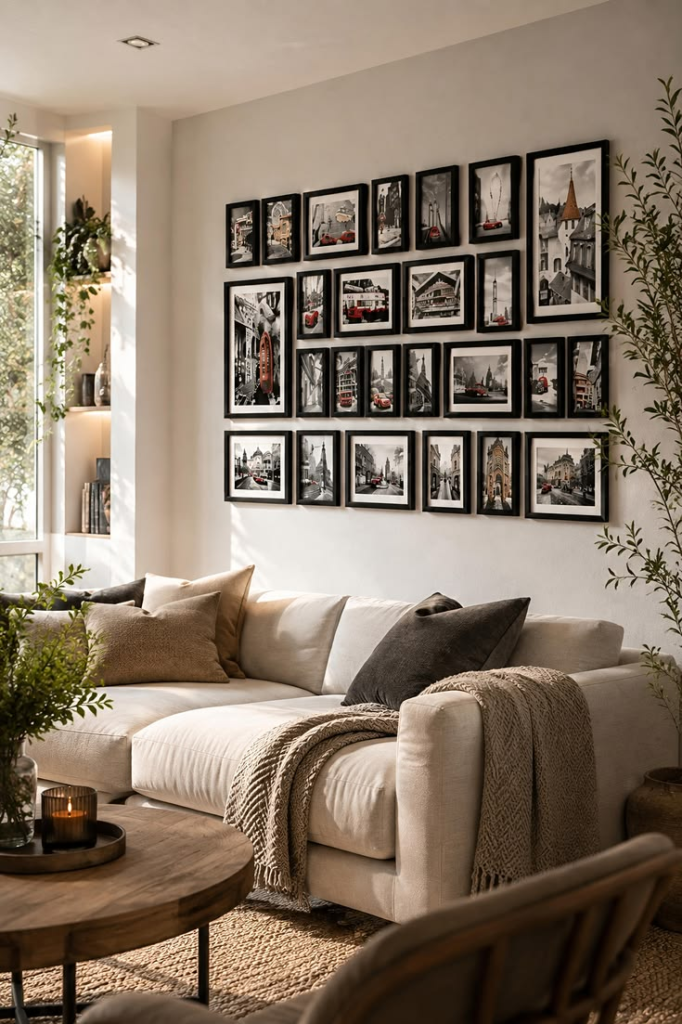
Using the same frame color and finish throughout, even with mixed art styles and sizes inside them, ties a varied gallery wall together visually. Black frames specifically read as more modern and graphic; if your room leans warmer or more traditional, natural wood frames do the same unifying job with a softer feel.
9. Mixed-media gallery wall
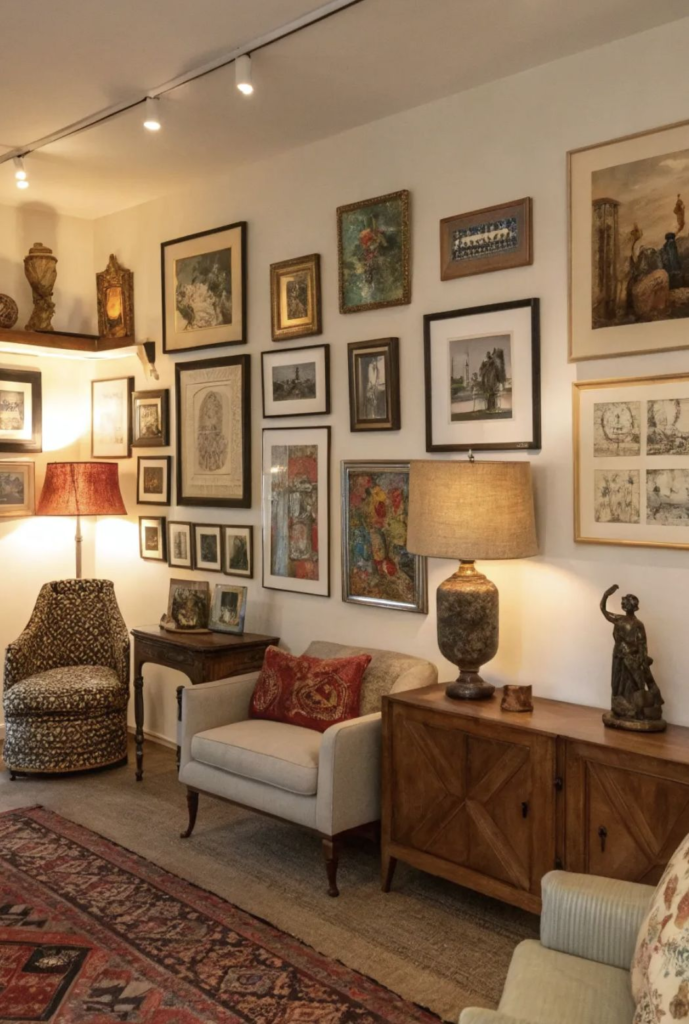
Combining actual framed art with other flat wall objects — a small mirror, a woven wall hanging, a decorative plate — rather than framed prints exclusively. This adds more textural variety than an all-framed-art gallery wall, though it does take a slightly more practiced eye to keep the mix feeling curated instead of cluttered.
Mirrors Above the Couch
10. One large statement mirror
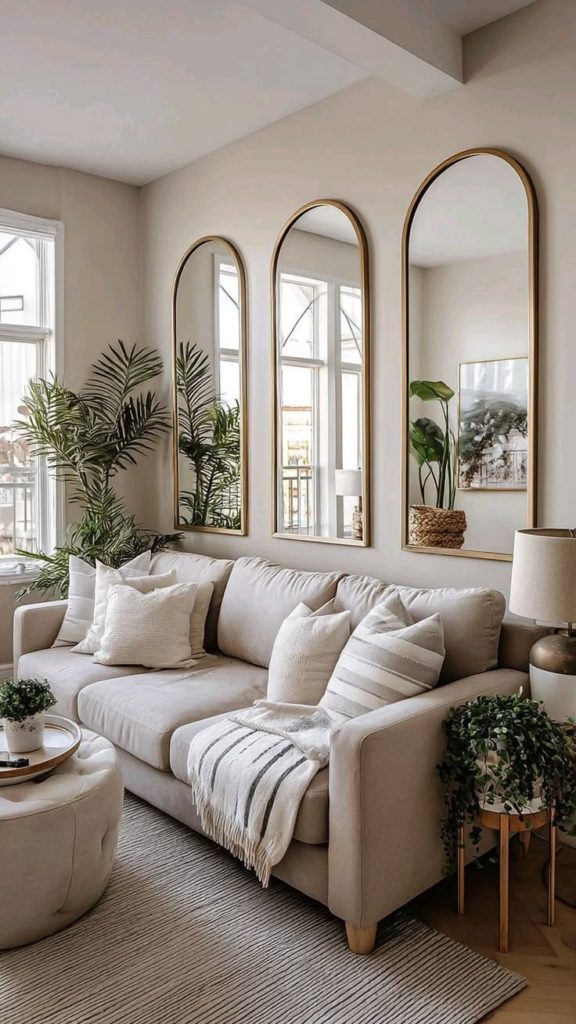
A mirror sized similarly to a single large art piece — same two-thirds-width guideline applies — placed above the couch instead of art. Mirrors above a couch do genuine functional work beyond decoration, bouncing light around the room and making the space feel larger, which matters a lot in smaller living rooms specifically.
11. Cluster of small round mirrors
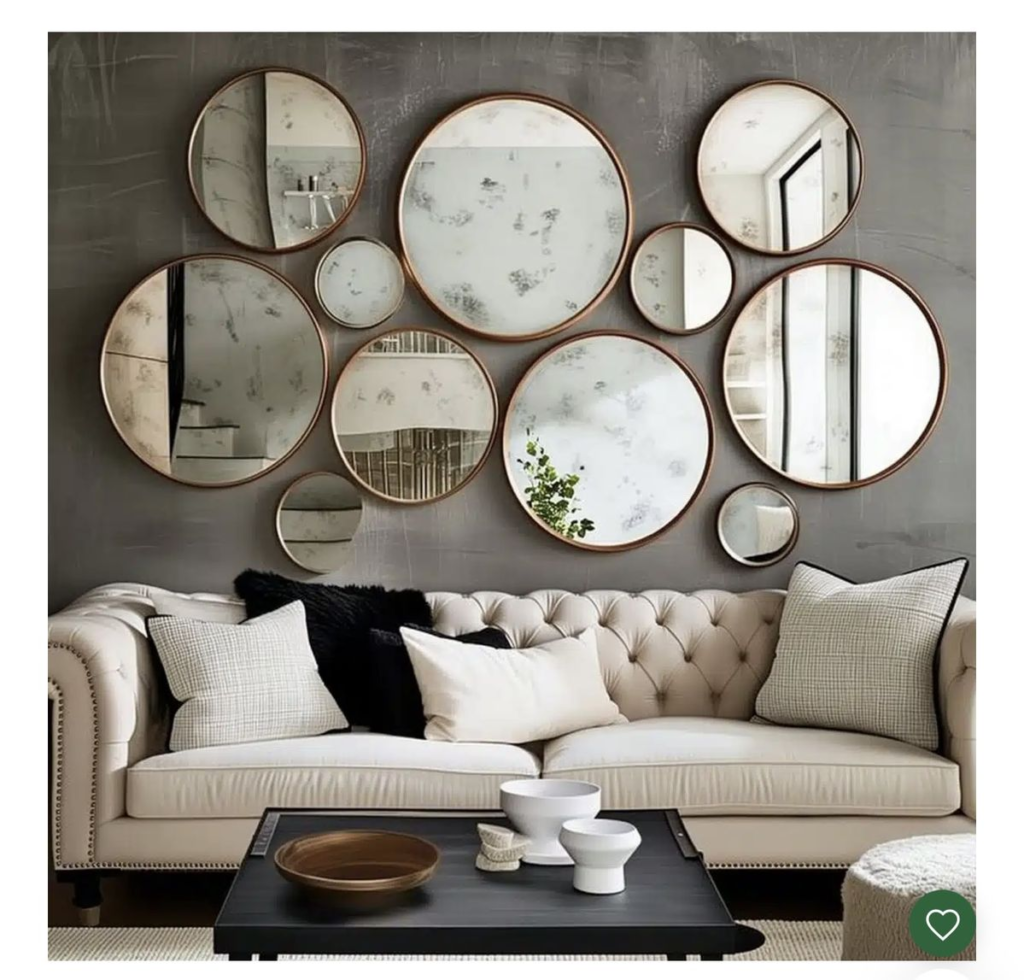
Multiple small mirrors, often in varying sizes, arranged in a loose cluster rather than one large piece. This has been a popular alternative to the single big mirror for a while now, giving you the light-bouncing benefit spread across a wider visual area with more texture than one flat surface provides.
12. Mirror paired with flanking art or sconces
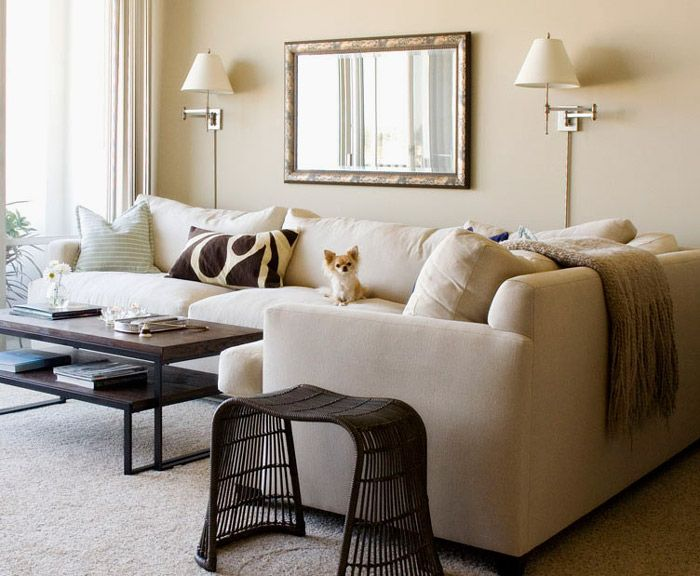
A mirror as the central piece with smaller art pieces or wall sconces symmetrically placed on either side, rather than the mirror standing alone. This works especially well above a couch flanked by matching end tables, since the symmetry above echoes the symmetry of the furniture below it.
Pro tip: If you’re hanging a mirror specifically to bounce light, check what it’ll actually reflect before committing to the spot — a mirror that reflects a blank wall does a lot less for the room than one angled to catch a window or a lamp. I moved mine about eight inches to the left after initially hanging it, once I realized it was reflecting the back of a bookshelf instead of the window on the opposite wall.
Shelving and Functional Wall Decor
13. A single long floating shelf
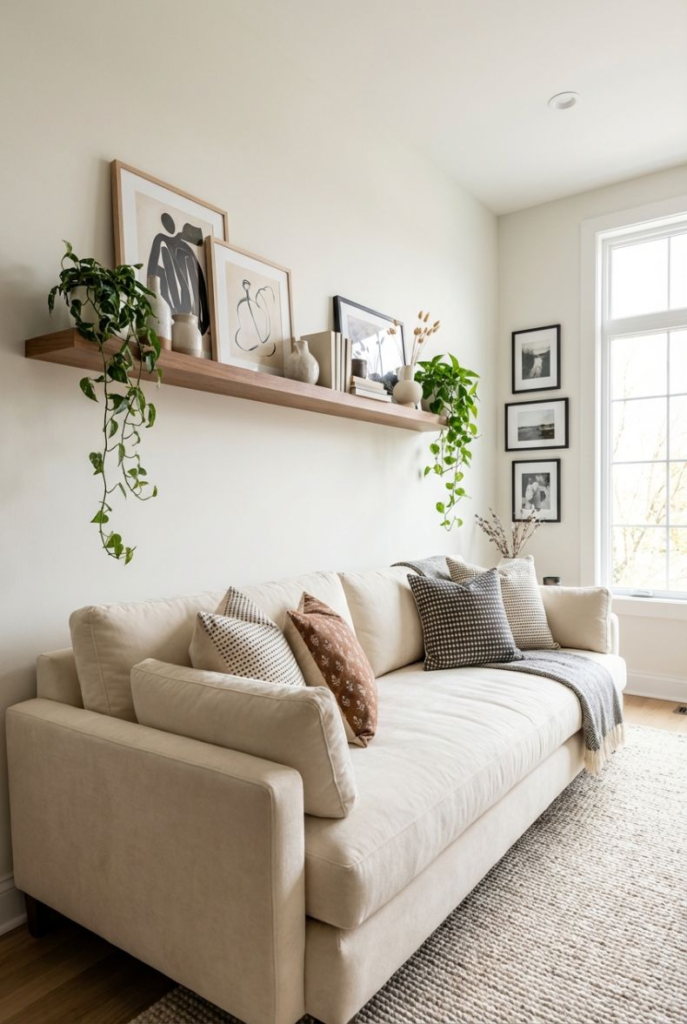
A shelf spanning most of the couch’s width, styled with a rotating mix of small art, books, and objects rather than fixed permanently. This is one of the more flexible options on this whole list because you can change what’s displayed seasonally or whenever you’re bored of the current arrangement, without any new holes in the wall.
14. Two stacked floating shelves
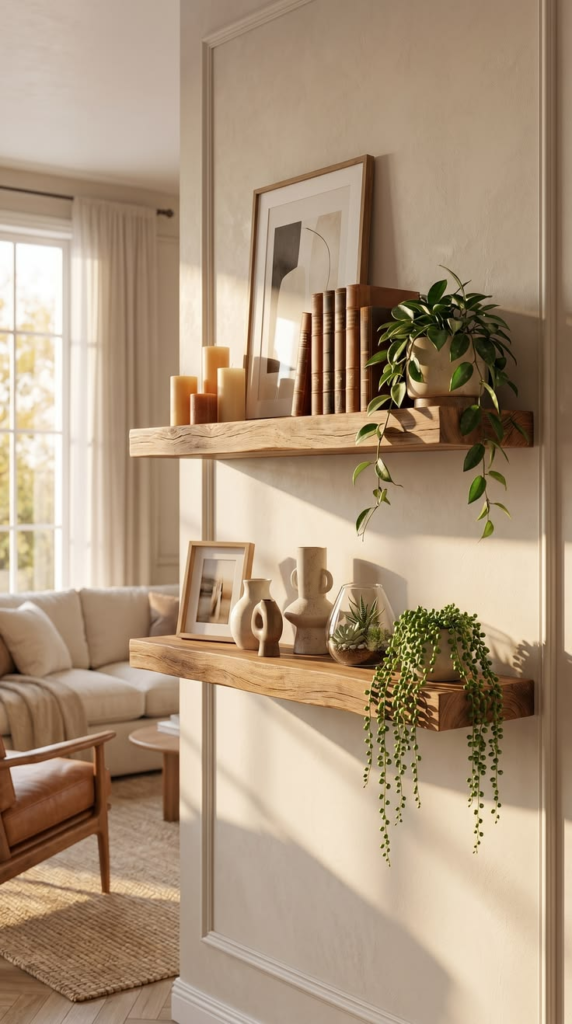
Similar concept with two shelves at different heights instead of one, giving more display space and a slightly more layered look. Keep meaningful vertical gaps between the two shelves and between the top shelf and the ceiling so the arrangement doesn’t feel cramped.
15. A ladder-style leaning shelf unit
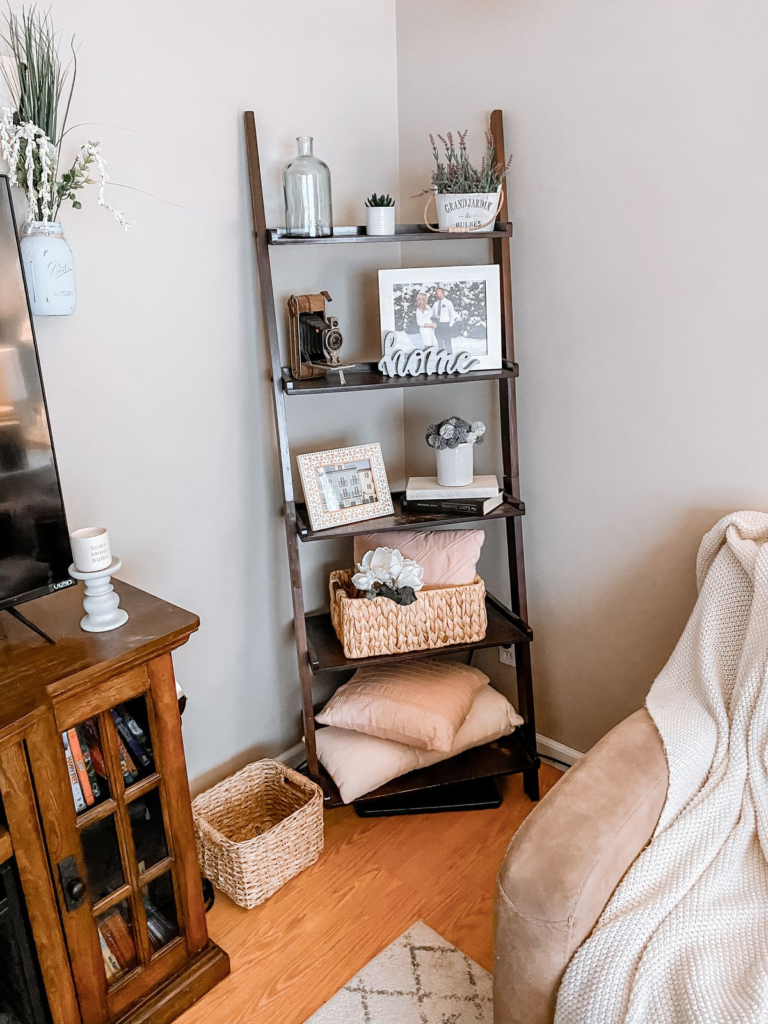
Instead of wall-mounted shelves, a leaning ladder shelf placed against the wall behind the couch (works best with a couch that’s pulled slightly away from the wall, or in a room with enough depth to accommodate it). This is a good option specifically for renters who can’t drill into walls, since it needs zero wall-mounting hardware.
16. Wall-mounted plant shelf or plant wall
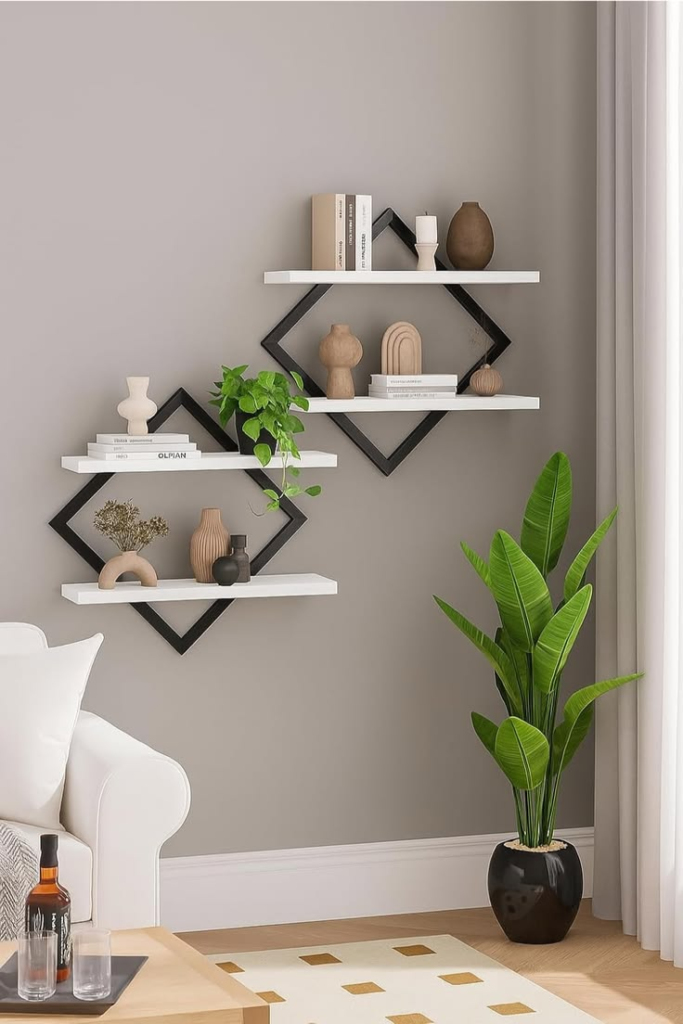
A shelf or small wall-mounted planters specifically for houseplants above the couch, rather than art or objects. This brings in living texture and color that flat wall decor can’t, though it does mean factoring in light — check that the spot actually gets enough natural light for whatever plants you’re hoping to keep alive there before committing.
Textile and Fiber Art
17. Macrame wall hanging
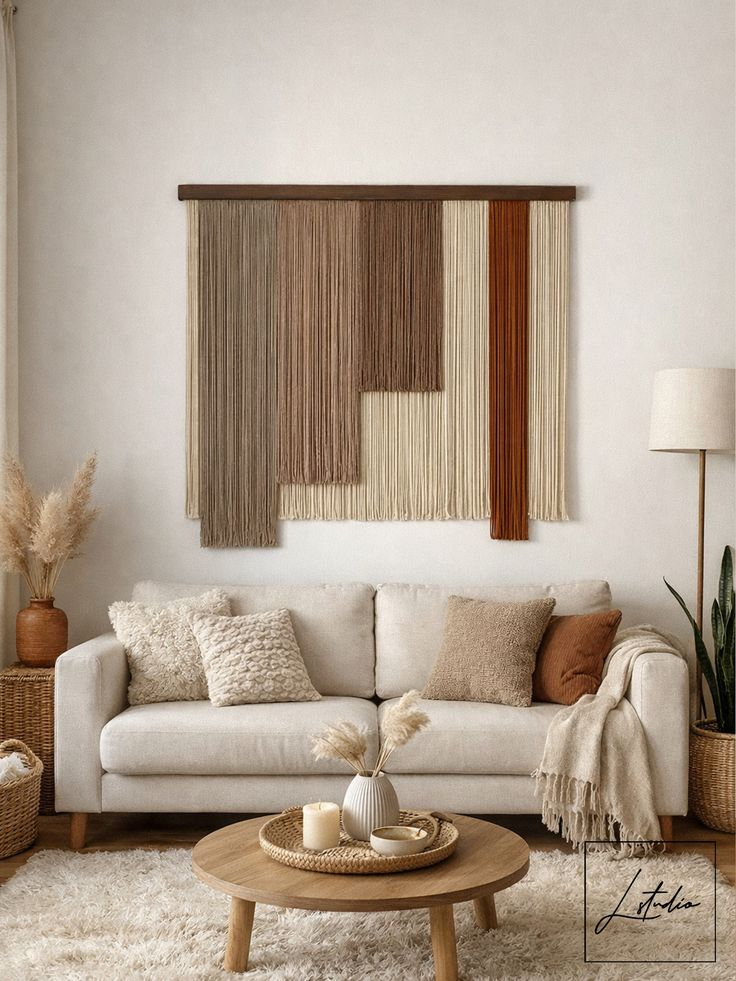
A large-scale macrame piece, either a single dramatic knotted design or a simpler woven panel, adds texture and a handmade quality that flat art doesn’t have. This had a real resurgence over the past several years and it’s stuck around specifically because it works so well at the scale needed above a couch — the knotted texture reads clearly even from across a room.
18. Woven tapestry wall hanging
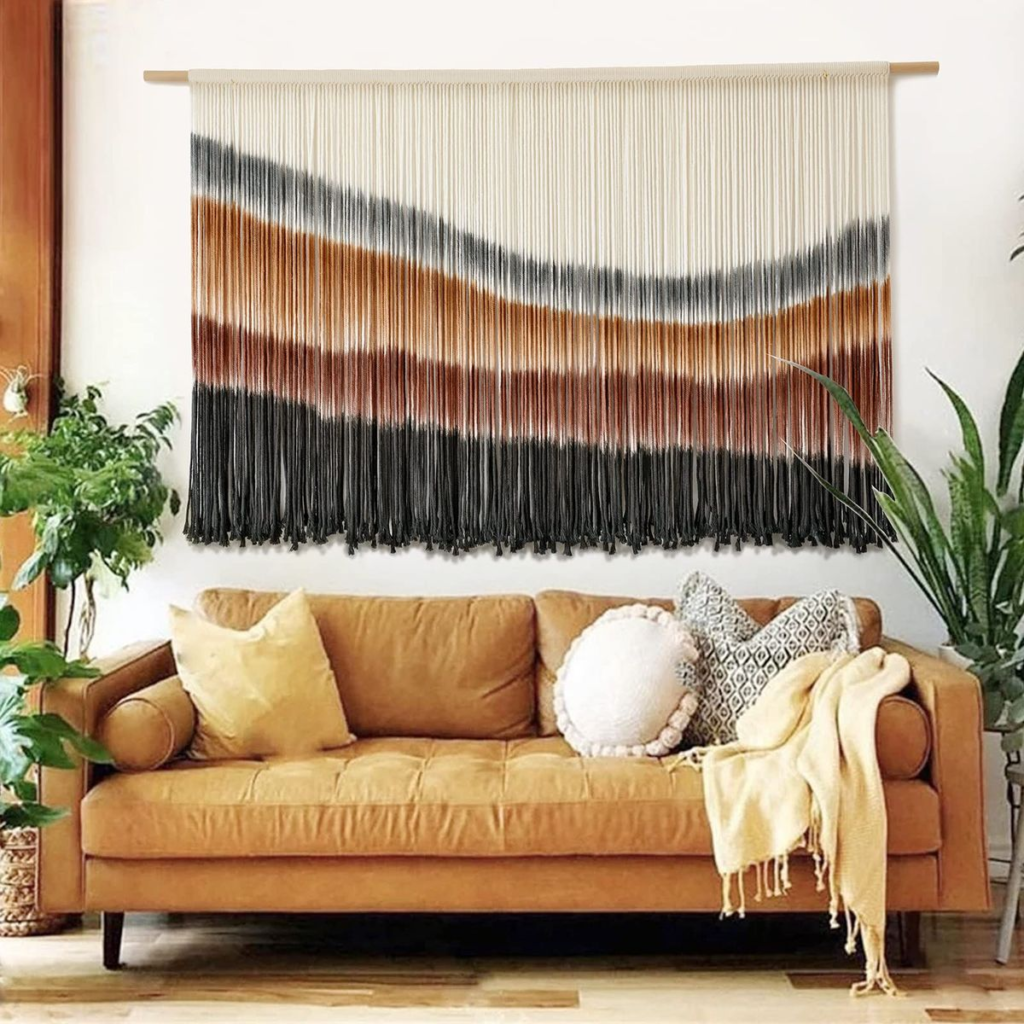
Similar concept to macrame but with a woven, often patterned textile instead of knotted rope work. This tends to bring in more color and pattern than macrame typically does, which is worth considering if your room could use a pop of pattern rather than more neutral texture.
19. Quilt or vintage textile displayed as art
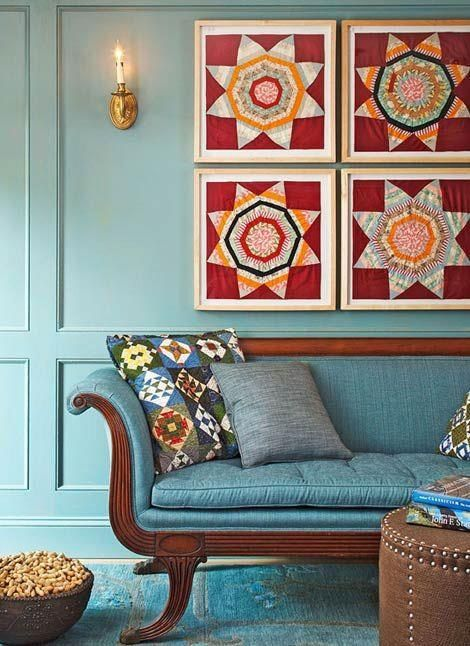
A quilt (new or a genuinely vintage find) hung using a wooden dowel or a quilt hanger rather than framed, giving you a large-scale textile piece with real history if it’s a family or found vintage piece. This is a genuinely good option if you have a meaningful textile sitting in a closet that’s never actually been displayed.
20. Fabric-wrapped panels as an alternative to framed art
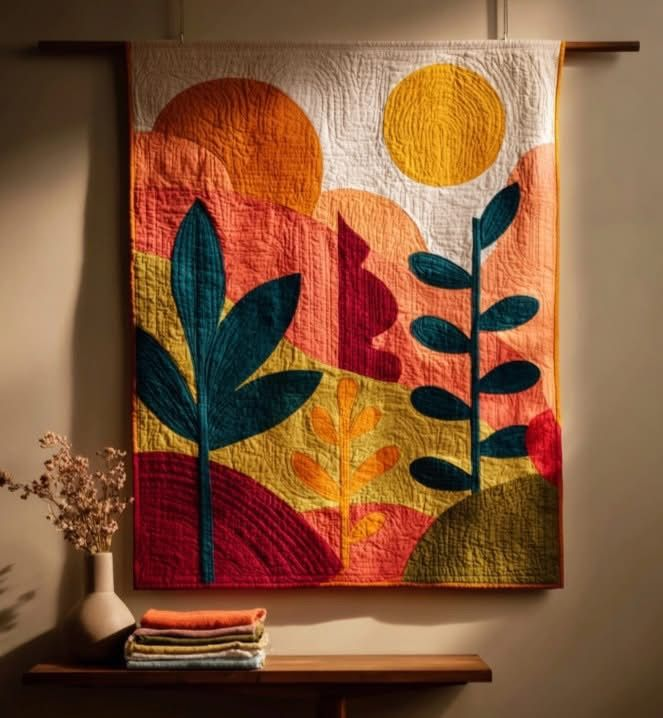
DIY or purchased panels where fabric is stretched over a frame rather than printed art, giving you color and pattern at a large scale for often less cost than an equivalent framed print, especially if you’re doing this yourself with fabric remnants and basic wood framing.
Alternative and Less Obvious Options
21. A collection of hats, baskets, or functional objects as wall art
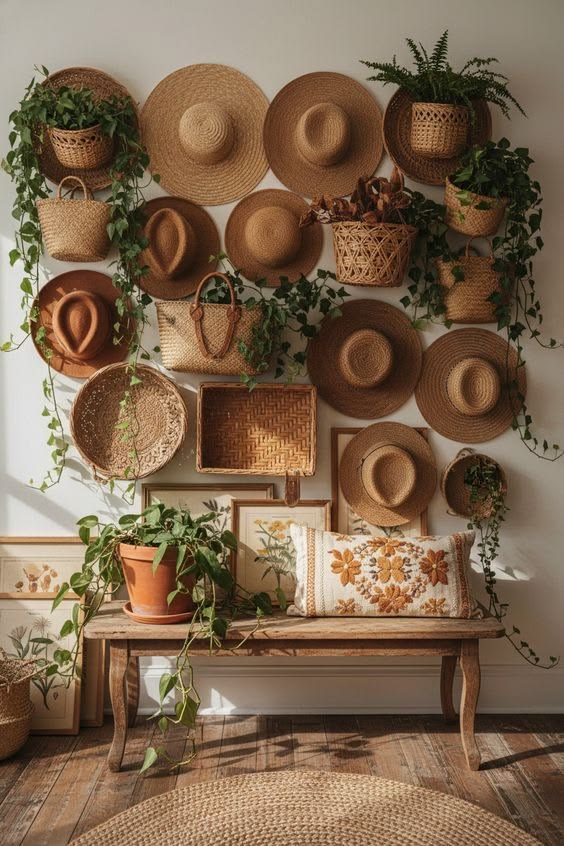
Woven baskets or hats arranged in a cluster, mounted flat or at a slight angle, gives you texture and dimension using objects that don’t read as “art” in the traditional sense. This is a genuinely inexpensive option if you already own a collection of these items, since you’re using what you have rather than buying new pieces specifically for the wall.
22. A large clock as the central piece
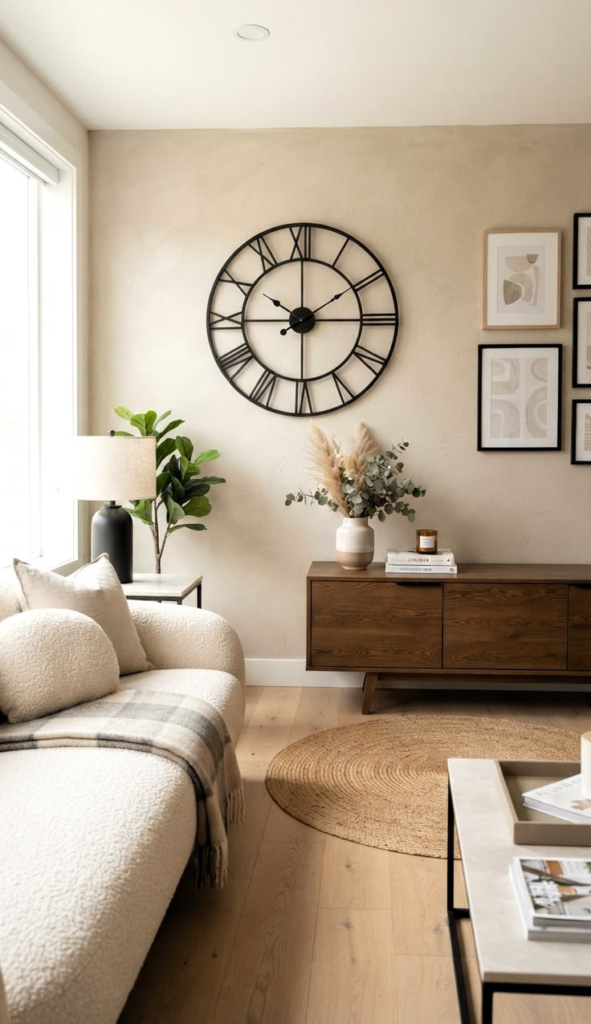
An oversized statement clock does double duty as both wall decor and an actual functional piece, which some people appreciate in a living room where you might not otherwise have a clock visible. This works best as a single, fairly minimal piece rather than paired with a lot of surrounding gallery-wall clutter, since the clock face needs some visual breathing room to actually read clearly from across the room.
23. Wall-mounted string lights or light fixtures as decor
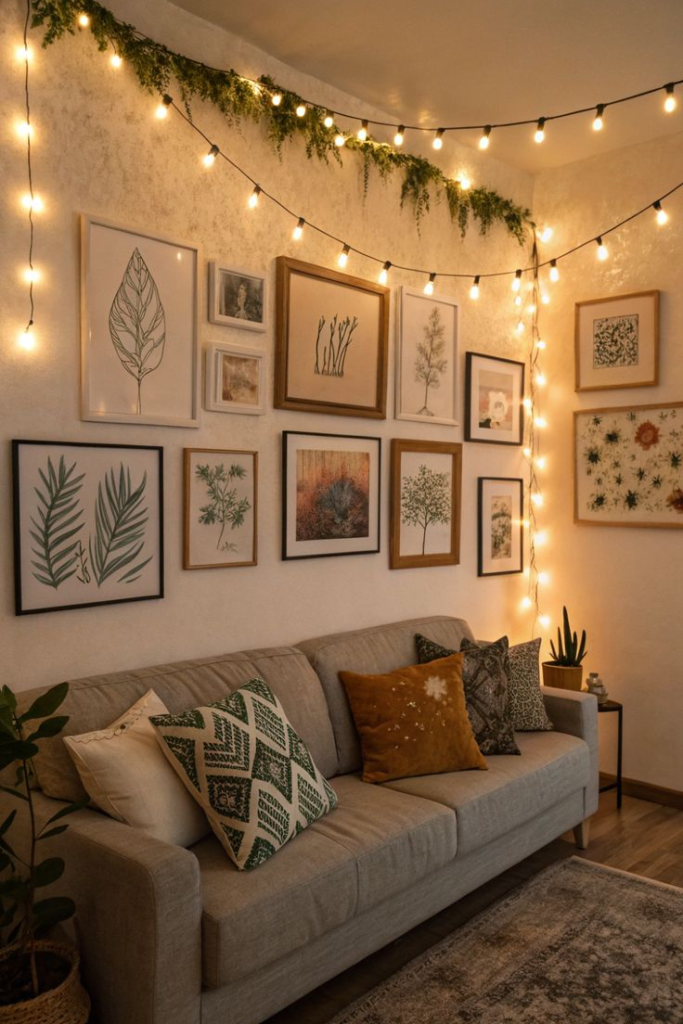
An arrangement of small wall sconces, a wall-mounted light fixture used more for ambiance than actual task lighting, or even a curated arrangement of string lights mounted flat against the wall in a shape or pattern. This adds a lighting element to the space above your couch that pure decor can’t, and it’s a genuinely underused option compared to how often it shows up in professionally designed spaces.
24. A decorative wall-mounted rug or kilim
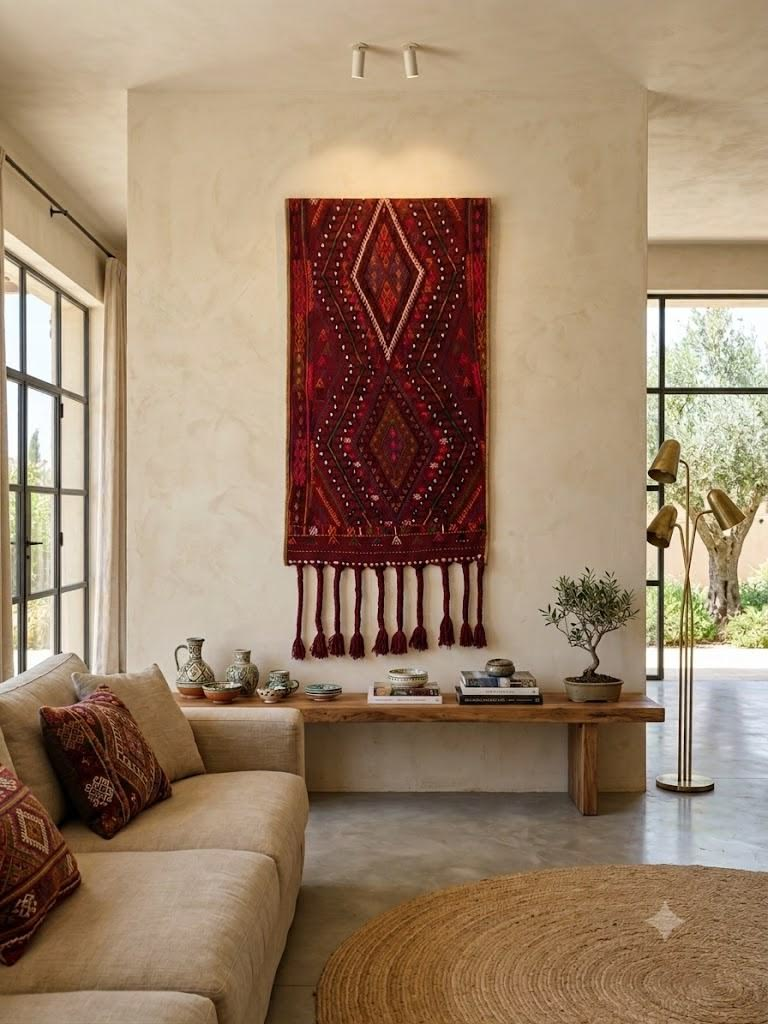
Smaller decorative rugs, particularly flat-woven kilim styles, mounted on the wall the same way you’d hang a tapestry, bringing in pattern and rich color at a scale that works well above a couch. This is a less common choice than the textile options above, but it’s a genuinely striking one if you find the right piece, and it tends to be a conversation starter precisely because it’s less expected.
25. Vintage or antique architectural salvage pieces
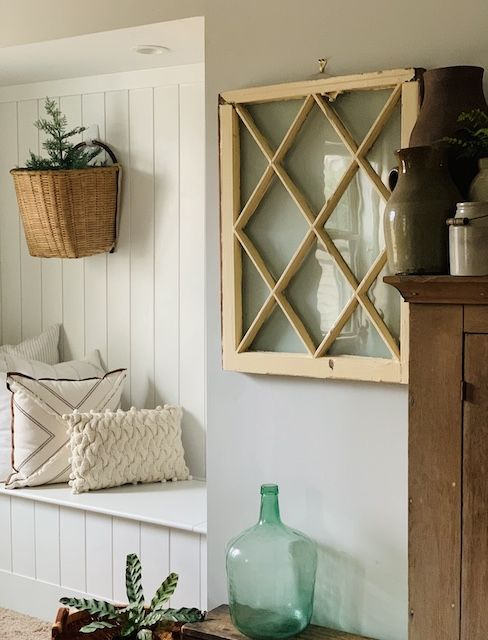
Old window frames, salvaged shutters, or similar architectural pieces mounted as wall decor, giving genuine history and texture that new-made items can’t replicate. Check weight carefully before hanging anything like this — architectural salvage can be a lot heavier than typical wall decor, and it needs hardware rated appropriately rather than standard picture-hanging strips or small nails.
Combining Multiple Approaches
26. Mirror plus small flanking art
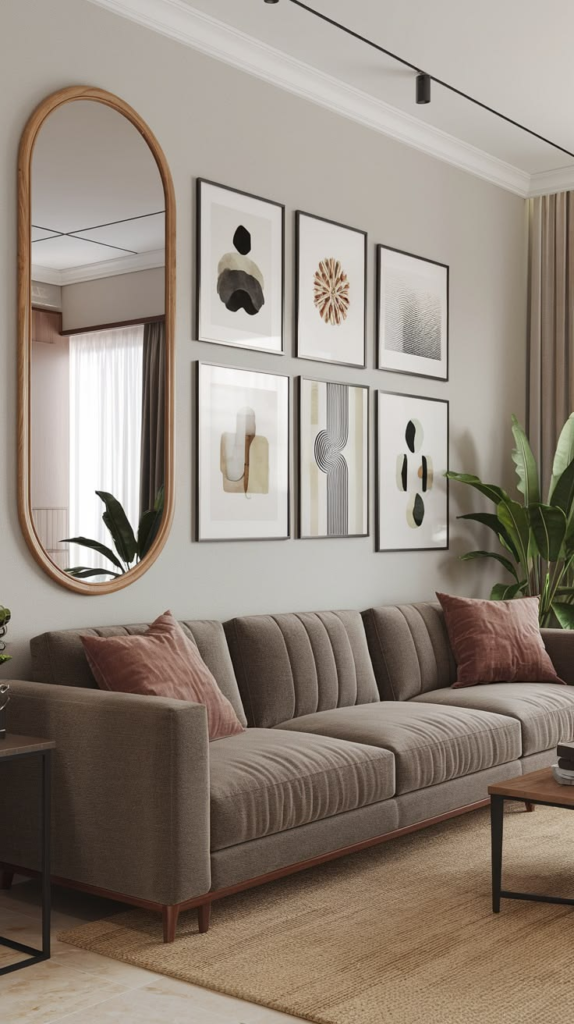
A central mirror with one or two smaller art pieces off to the side rather than fully symmetrical flanking pieces, giving you the light-bouncing benefit of a mirror without going fully minimal or fully into gallery-wall territory.
27. Shelf plus art above it
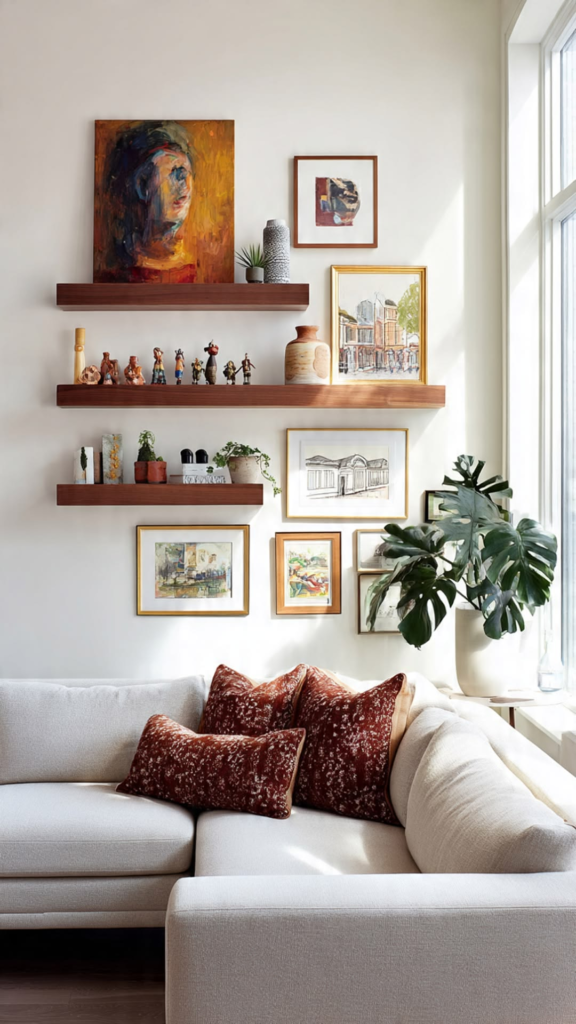
A floating shelf positioned lower, with a piece of art or a mirror hung on the wall above it rather than resting on the shelf itself, giving you layered depth — functional display space below, fixed visual anchor above.
28. Textile plus small gallery cluster around it
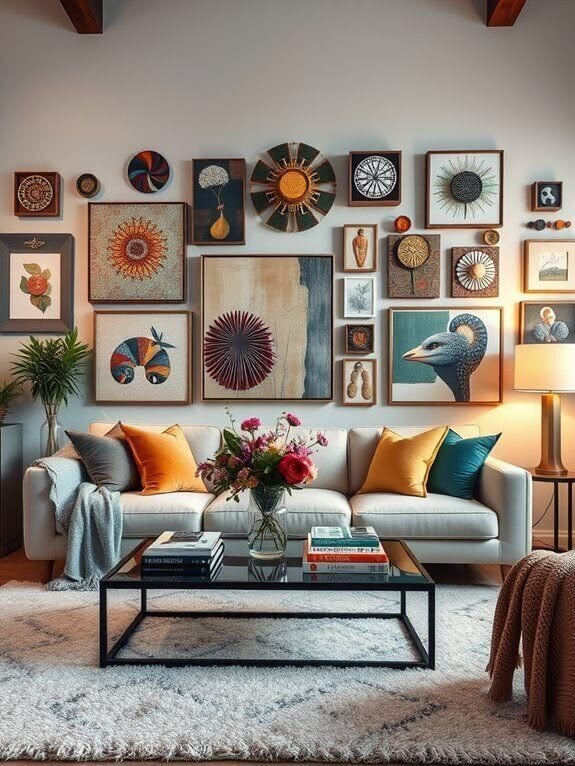
One larger tapestry or textile piece as the visual anchor, with a few smaller framed pieces arranged loosely around its edges rather than in a full formal gallery grid. This gives you texture and variety without the piece count and hanging complexity of a full traditional gallery wall.
Sizing and Placement by Couch Size
| Couch width | Recommended decor width | Good single-piece options | Good multi-piece options |
|---|---|---|---|
| Loveseat (under 60″) | 40–45 inches | Single medium art piece, small mirror | 2×2 grid gallery, small mirror cluster |
| Standard sofa (72–84″) | 48–63 inches | Large canvas, large mirror, single floating shelf | 3×3 gallery grid, tapestry plus small cluster |
| Oversized/sectional (90″+) | 60–75+ inches | Extra-large canvas, two stacked shelves | Large asymmetrical gallery, mirror plus flanking art |
If you’re between sizes or your couch doesn’t fit neatly into one of these categories, err toward the narrower end of the recommended range rather than the wider one — it’s much easier to add a small additional piece later than to have something that already reads as too wide for the furniture below it.
Where I’d Start If I Were Decorating That Wall Again
If I were standing in front of that same blank wall again, knowing what I know now, I’d skip buying anything at all for the first week and just tape out a few different size options directly on the wall, living with each one for a day before deciding. That single step would’ve saved me from the too-small first piece and probably saved me a full year of staring at an empty wall while I tried to work up the nerve to spend more on a second, better-sized attempt. The actual art or mirror or shelf you choose matters less than getting the scale right first — nail the proportions, and almost any of these thirty-one ideas will look intentional above your couch instead of like an afterthought.


Leave a Reply