
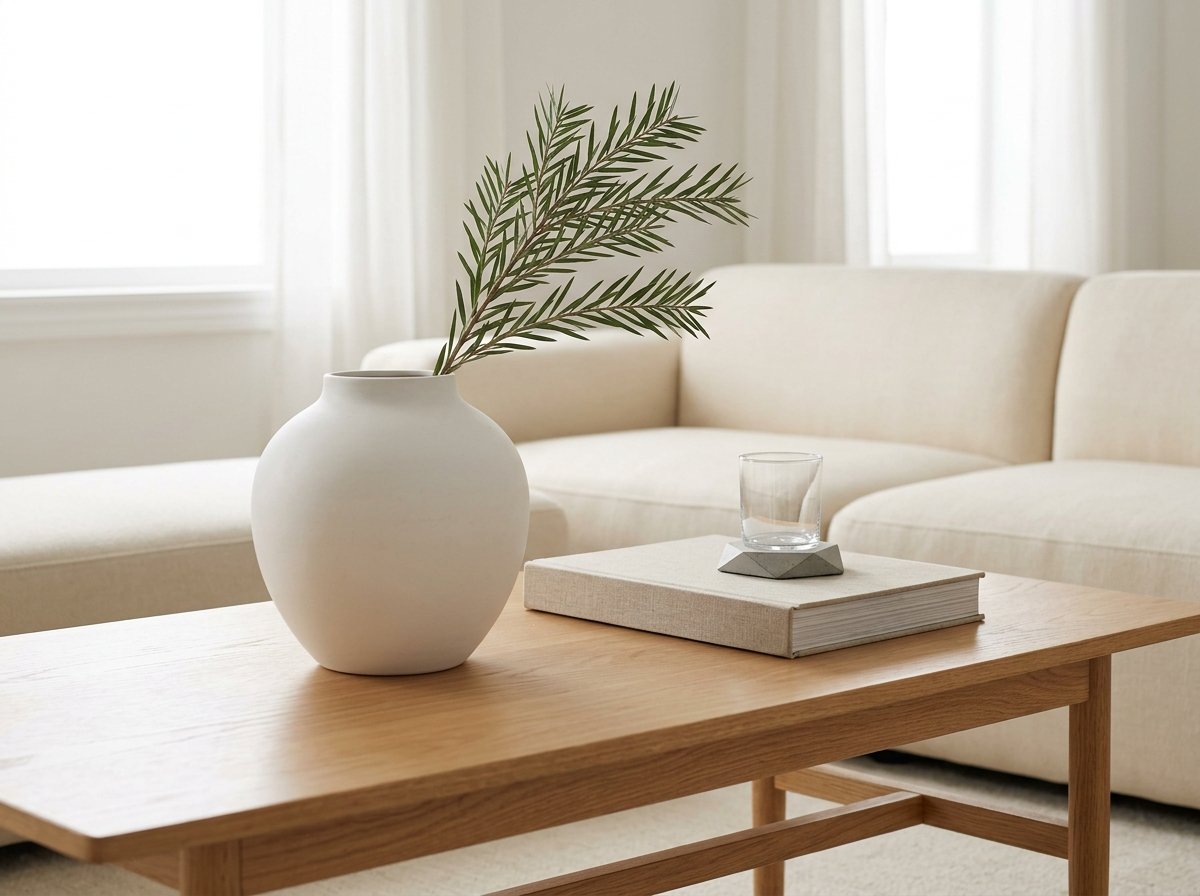
My coffee table sat completely bare for about eight months after I moved into my first apartment, because every styled coffee table I saw online looked like it belonged in a room nobody actually lived in — a stack of oversized books nobody reads, a single candle, and suspiciously no coasters anywhere in sight.
It wasn’t until my friend Odalis pointed out that her coffee table styling changed almost weekly based on what she was actually using the table for that day that I understood the real trick: a good coffee table styling setup has to survive contact with actual life, not just a photo.
That’s the tension every coffee table styling guide has to deal with and most don’t — you want the table to look intentional and pulled together, but it also has to hold your coffee mug, your remote, and whatever your evening actually requires without you feeling like you’re wrecking a display.
The good news is that coffee table styling ideas that account for real use tend to look better long-term anyway, since a table that’s only styled for photos usually gets shoved aside the first time someone actually wants to put their feet up.
I’ve organized these 25 ideas by aesthetic — modern minimalist, boho, traditional/classic, coastal, industrial, and Scandinavian — plus a section on functional styling elements that work across every style, since the actual objects you put on a coffee table (trays, books, small storage) matter as much as which aesthetic you’re going for.
Modern Minimalist Coffee Table Styling
Minimalist styling is really about restraint and negative space more than any specific object choice, which makes it one of the easier styles to execute but also one of the easiest to get slightly wrong by either under- or over-styling.
1. The Single Sculptural Object
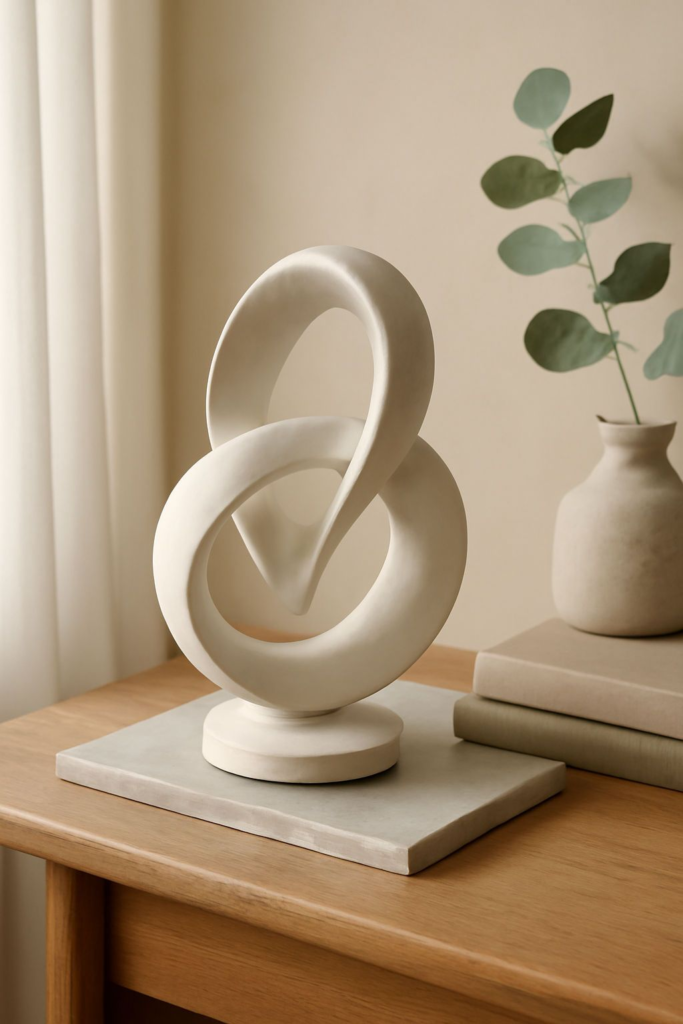
One statement piece — a ceramic sculpture, an abstract wood or stone form — placed slightly off-center rather than dead-center creates visual interest without cluttering the surface, which is the whole point of minimalist styling. The trade-off is that this only works if the piece itself is genuinely interesting enough to hold visual weight on its own; a small, unremarkable object alone on a large table can read as empty rather than intentional.
2. The Monochrome Tray Setup
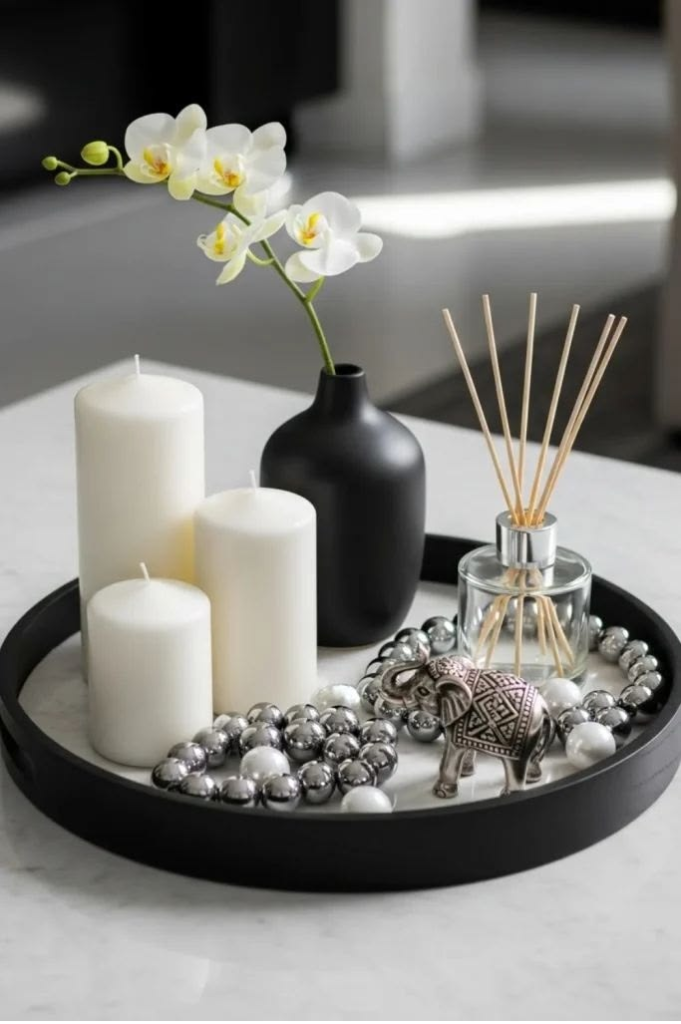
A single tray in a neutral tone, holding just two or three items in a similar color family (a candle, a small dish, a single stem in a bud vase), keeps the surface organized while staying visually quiet. This is genuinely the setup I’d recommend for anyone starting minimalist styling for the first time, since the tray itself does most of the “keeping it neat” work automatically.
3. The Negative Space Approach
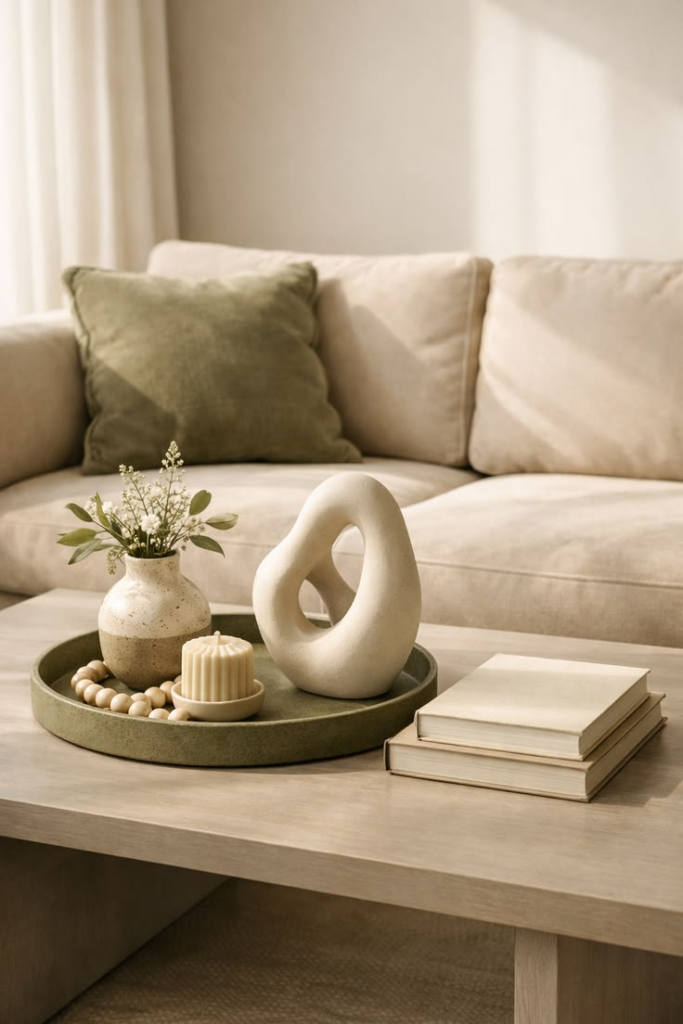
Deliberately leaving two-thirds or more of the table surface empty, with just one low, flat object like a single book or a small dish, is the most extreme version of minimalist styling and it genuinely requires confidence, since an underdressed coffee table can look unfinished if the rest of the room isn’t equally intentional. This works best when the table itself has an interesting material or shape, since the table becomes the visual focus rather than what’s on it.
Pro tip: In minimalist styling specifically, matte finishes read as more expensive and intentional than glossy ones on small objects — a matte ceramic dish or vase looks considered where the same shape in a glossy finish can look more like mass-produced decor. It’s a subtle difference but it’s the kind of detail that separates a styled minimalist table from a sparse one.
Boho Coffee Table Styling
Boho styling leans on texture and a collected-over-time feeling, which is close to the opposite instinct from minimalist restraint.
4. The Layered Textile and Object Grouping
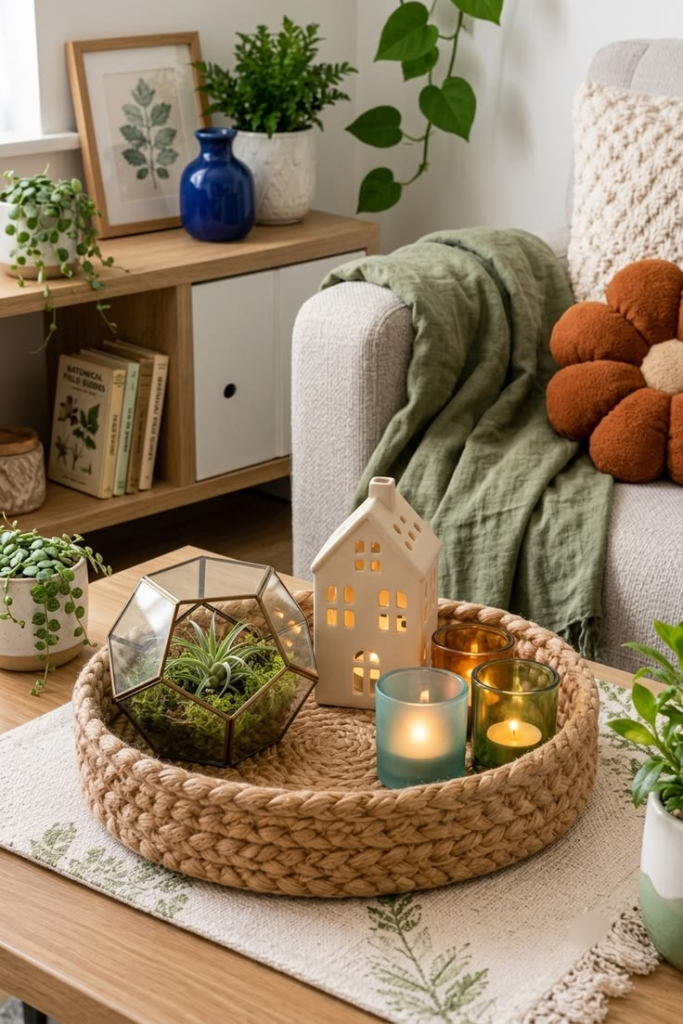
A woven placemat or small textile runner as a base, topped with a mix of a candle, a small plant, and a textured ceramic piece, creates the layered look boho styling depends on without needing a huge table surface to work with. The key is genuinely mixing textures — smooth ceramic against woven fiber against a matte candle — rather than everything sharing the same finish.
5. The Vintage Book Stack With a Plant Topper
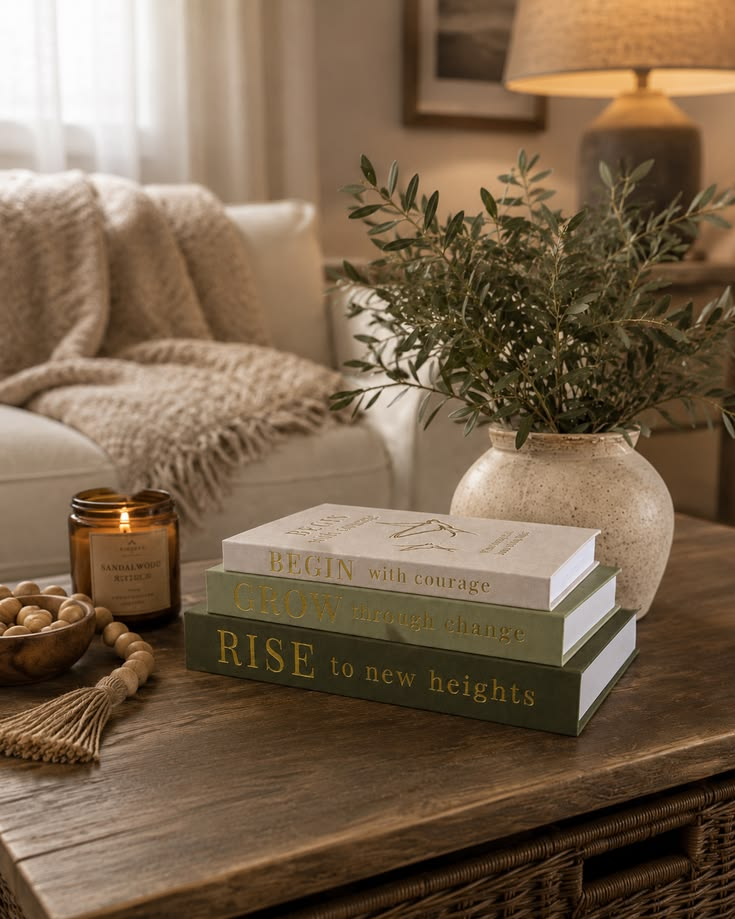
Stacking a few vintage-looking or well-worn hardcover books, then topping the stack with a small trailing plant or a textured object, is a classic styling move that works because it adds height variation to an otherwise flat surface. This is one of the styling tricks I see get real, specific traction on Pinterest boards focused on boho and eclectic interiors, particularly the versions using genuinely old, slightly worn book covers rather than new ones.
6. The Woven Basket Tray
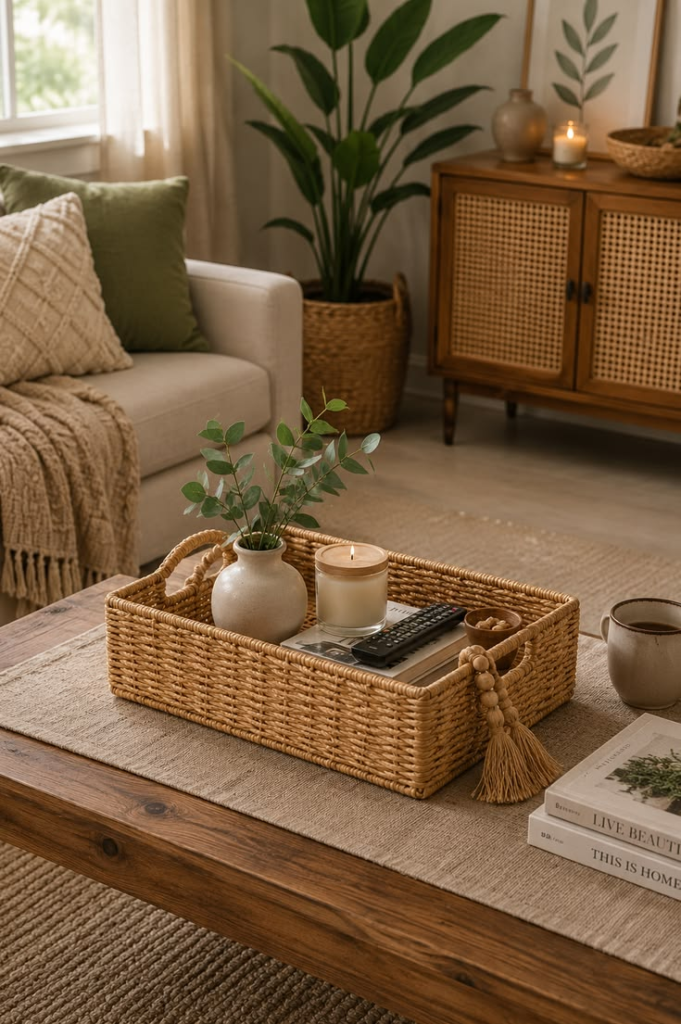
Swapping a traditional flat tray for a shallow woven basket adds texture right at the base layer of the styling, and it doubles as actual storage for remotes or coasters tucked just inside the basket’s edge, which solves the function problem boho’s more cluttered-looking aesthetic can otherwise create.
7. The Global-Inspired Object Mix
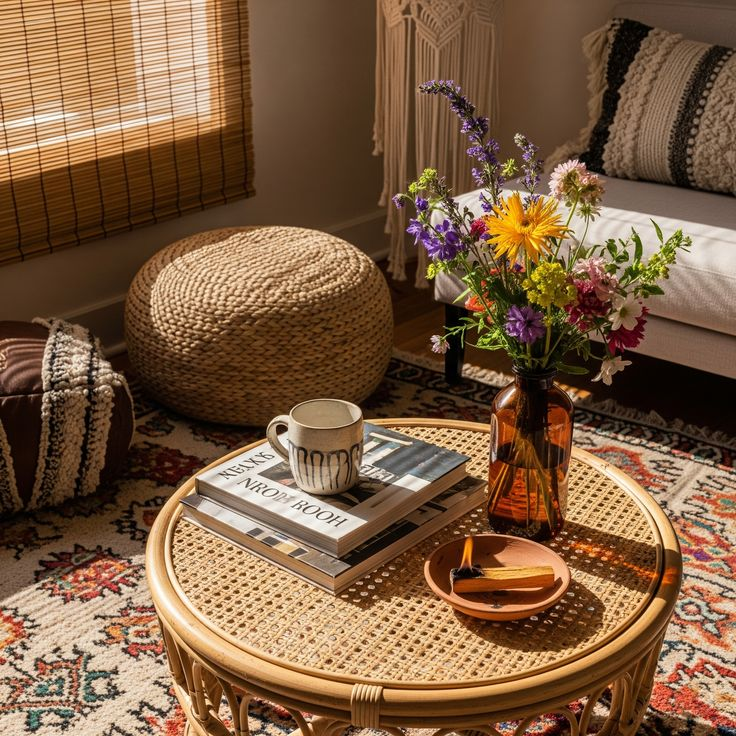
Small objects collected from travel or sourced to look like they were — a carved wood bowl, a small brass dish, a patterned ceramic piece — grouped together rather than matched creates the eclectic, well-traveled feeling boho styling is built around. This is a style that genuinely gets better over time as you add pieces rather than buying a full set at once, which is worth mentioning since a lot of styling guides imply you need everything at once.
| Aesthetic | Key Materials | Object Count | Best For |
|---|---|---|---|
| Modern minimalist | Matte ceramic, stone, glass | 1–3 items | Small tables, clean-lined rooms |
| Boho | Woven fiber, wood, brass, ceramic | 4–6 items, layered | Eclectic, textured living rooms |
| Traditional/classic | Marble, polished wood, leather-bound books | 3–5 items | Formal or classic-style rooms |
| Coastal | Rattan, glass, light wood, linen | 3–5 items | Bright, airy living rooms |
| Industrial | Metal, reclaimed wood, dark leather | 2–4 items | Loft-style or exposed-brick rooms |
| Scandinavian | Light wood, wool, matte ceramic | 2–4 items | Bright, minimal, cozy rooms |
Traditional and Classic Coffee Table Styling
Traditional styling tends to favor symmetry and more polished materials than boho or industrial, and it works especially well on wood or marble tables with some architectural presence of their own.
8. The Symmetrical Lamp-and-Object Pairing
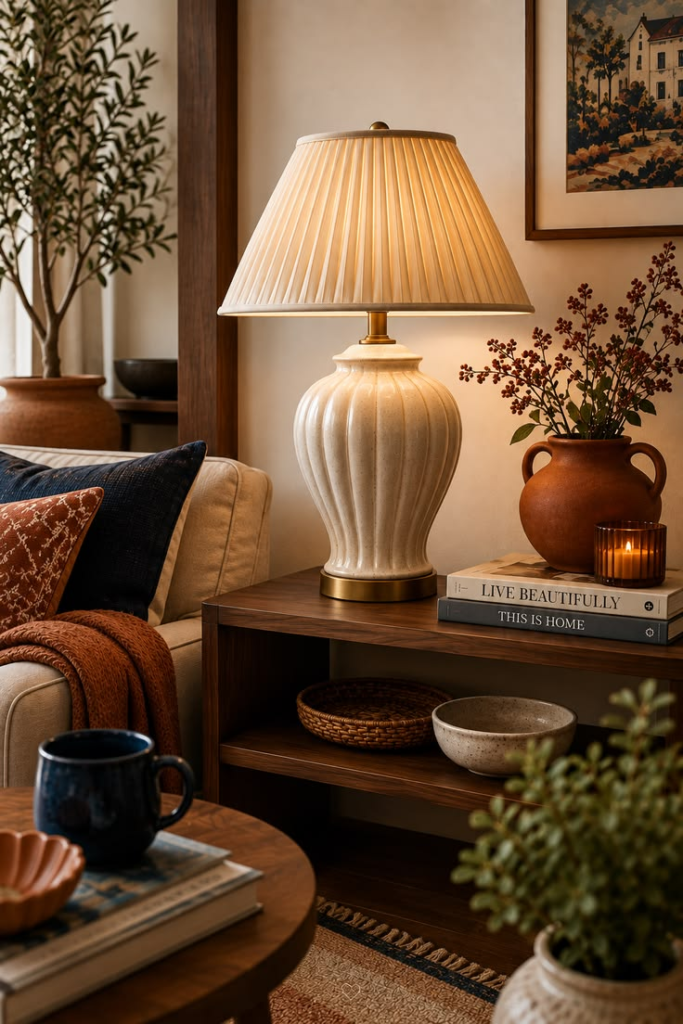
Two matching small lamps or candlesticks placed at either end of the table, with a centered object (a bowl, a small sculpture) between them, creates the balanced, formal look traditional styling depends on. This setup works especially well on longer, rectangular coffee tables where a fully centered single object alone would leave too much empty space on either side.
9. The Leather-Bound Book Stack With a Decorative Object
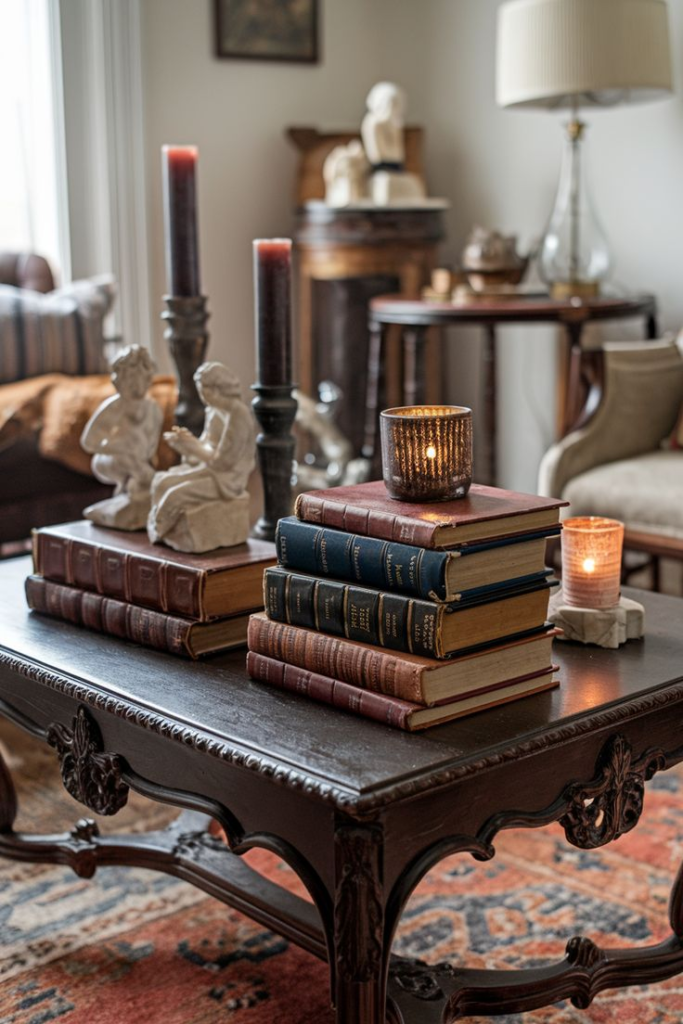
Stacking leather-bound or classically bound books, topped with a small brass or crystal decorative object, is one of the more recognizable traditional styling formulas, and it works because the book spines themselves add a warm, collected-library visual texture even before you add anything on top.
10. The Formal Tray With a Coordinated Object Set
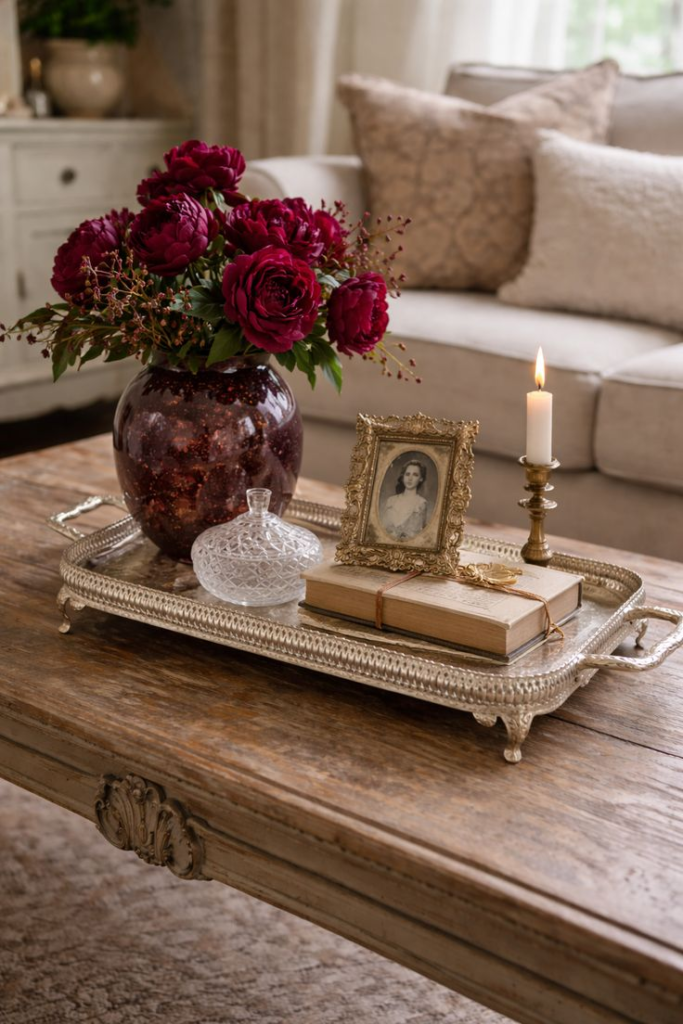
A polished wood or marble tray holding a matched set of items — a candle, a small dish, a decorative box — in coordinating finishes (all brass, or all matching wood tones) creates a put-together, formal look that reads as more curated than a mismatched grouping would in this specific style.
11. The Fresh Flower Centerpiece
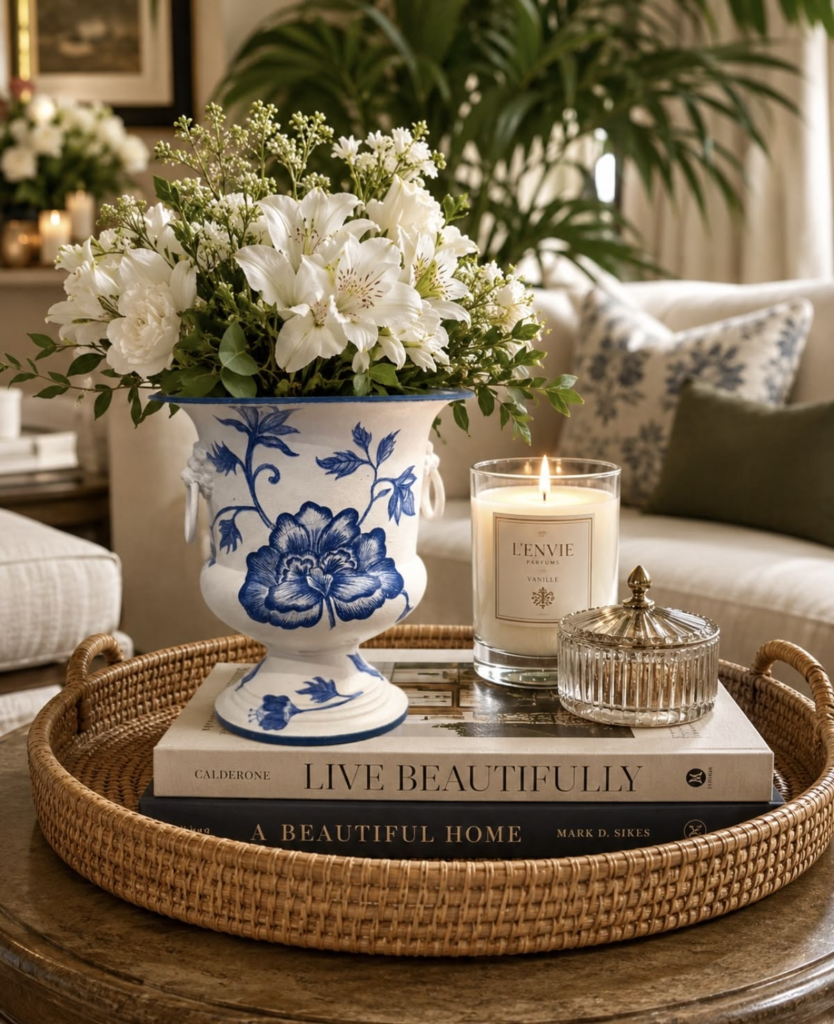
A single vase of fresh flowers, centered or slightly off-center, is one of the more classic and reliably elegant coffee table styling choices across traditional interiors specifically, and it’s worth noting that this is one of the few styling choices on this whole list that needs actual weekly maintenance (fresh water, removing wilted stems) to keep looking intentional rather than neglected.
Pro tip: In traditional styling, odd numbers of accessories (three or five pieces) read as more intentionally curated than even numbers, with one clear exception: symmetrical pairs (two lamps, two candlesticks) work specifically because the pair itself functions as one visual unit rather than two separate odd-numbered elements.
Coastal Coffee Table Styling
Coastal styling leans on light, natural materials and a breezy, uncluttered feeling that overlaps somewhat with both minimalist and boho but has its own specific material palette.
12. The Rattan Tray With Glass Accents
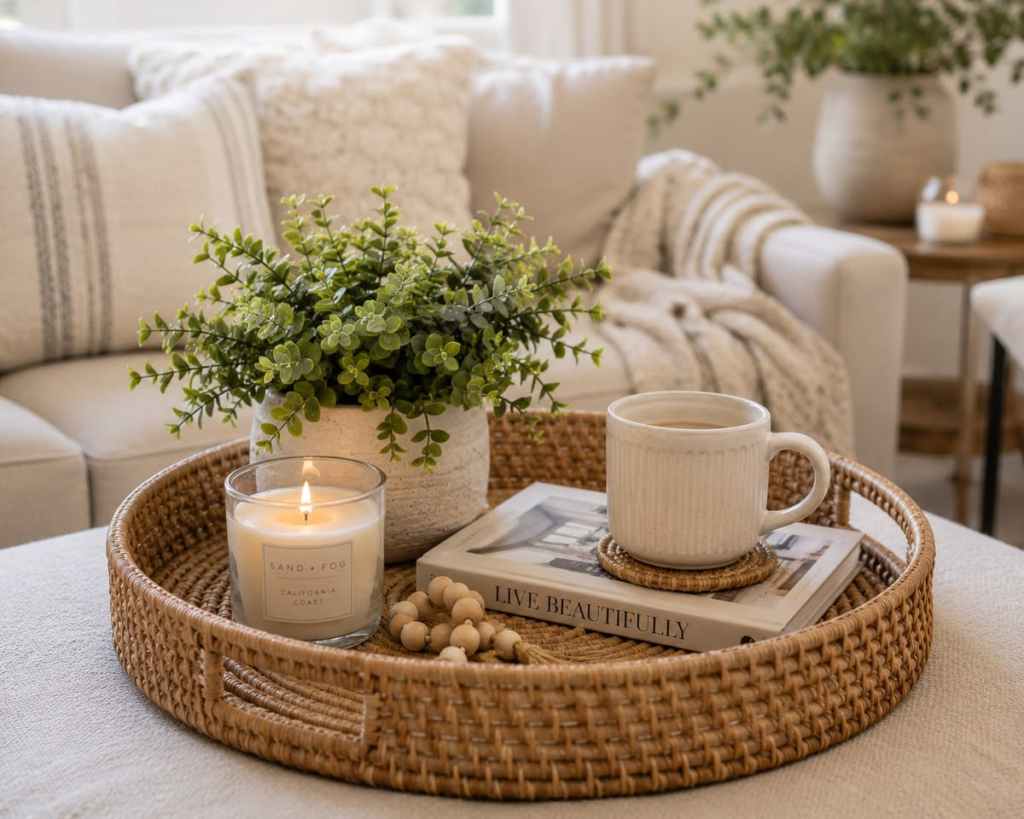
A light rattan or seagrass tray, holding a glass vase or candle holder alongside a small natural object like a piece of driftwood or coral, combines the natural texture coastal style depends on with enough lightness (via the glass) to avoid feeling heavy or dark. This pairing works because rattan alone can start to feel more boho than coastal, while the glass elements pull it back toward the breezier coastal palette.
13. The Linen-Covered Book Stack
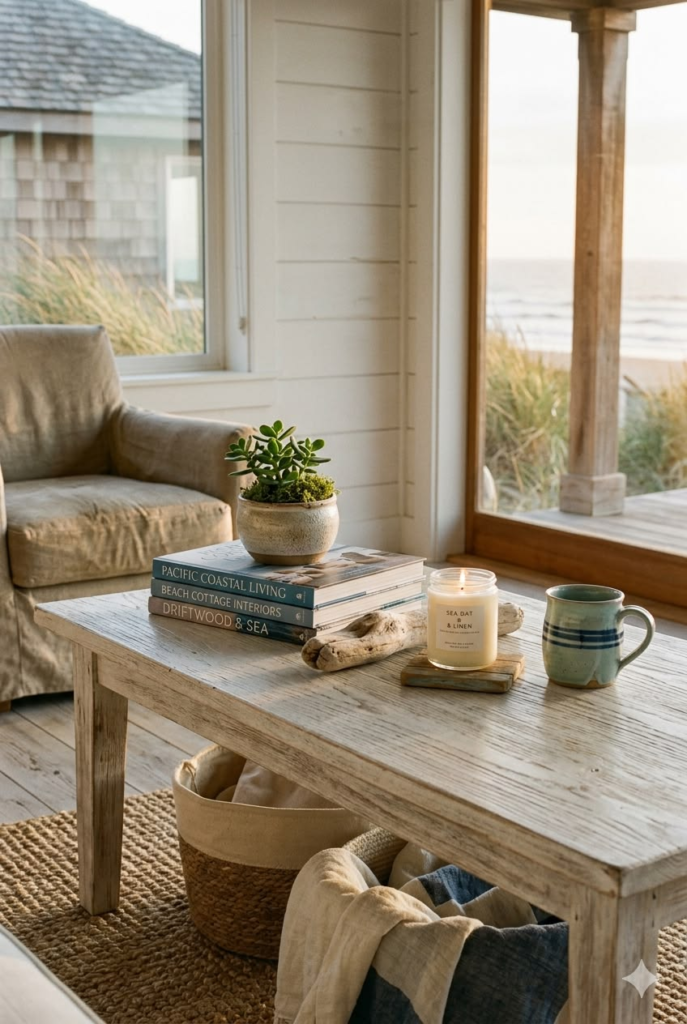
Books covered in plain linen or light-colored fabric (a common styling trick using inexpensive fabric-covered book kits) keep a stack of books from introducing the wrong color or pattern into an otherwise light, neutral coastal palette, since not every book cover fits the aesthetic on its own.
14. The Sea Glass or Shell Display
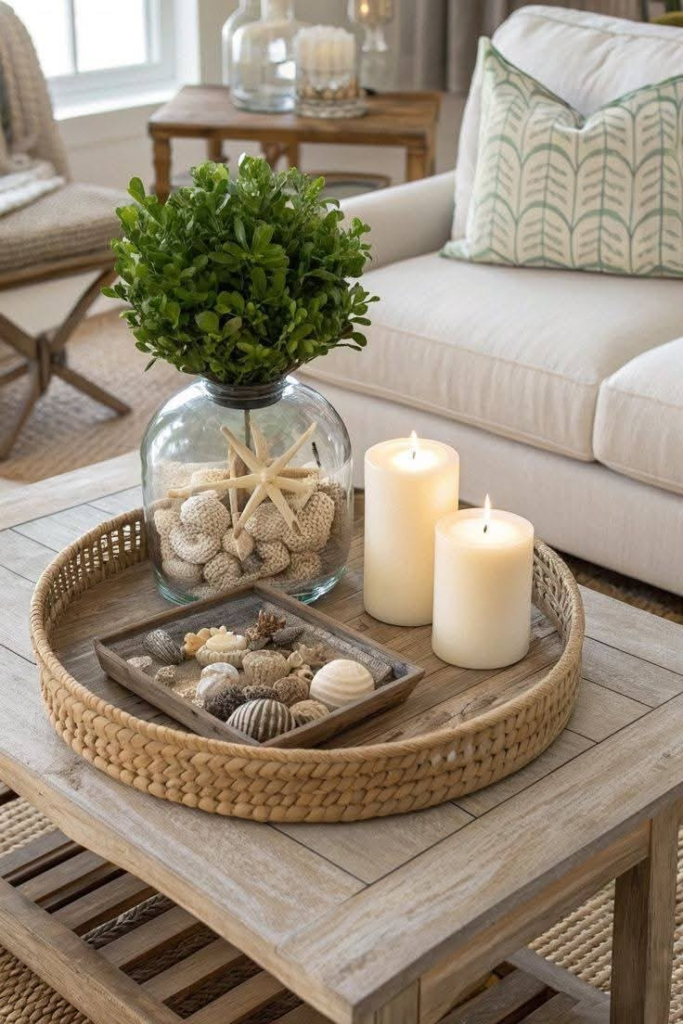
A small glass bowl or dish holding sea glass, shells, or smooth beach stones adds a genuinely personal, collected touch if these were gathered on an actual trip, and it’s a lower-cost styling element than most decorative objects since it’s often free if you already have a collection sitting in a drawer somewhere.
15. The Light Wood and White Ceramic Pairing
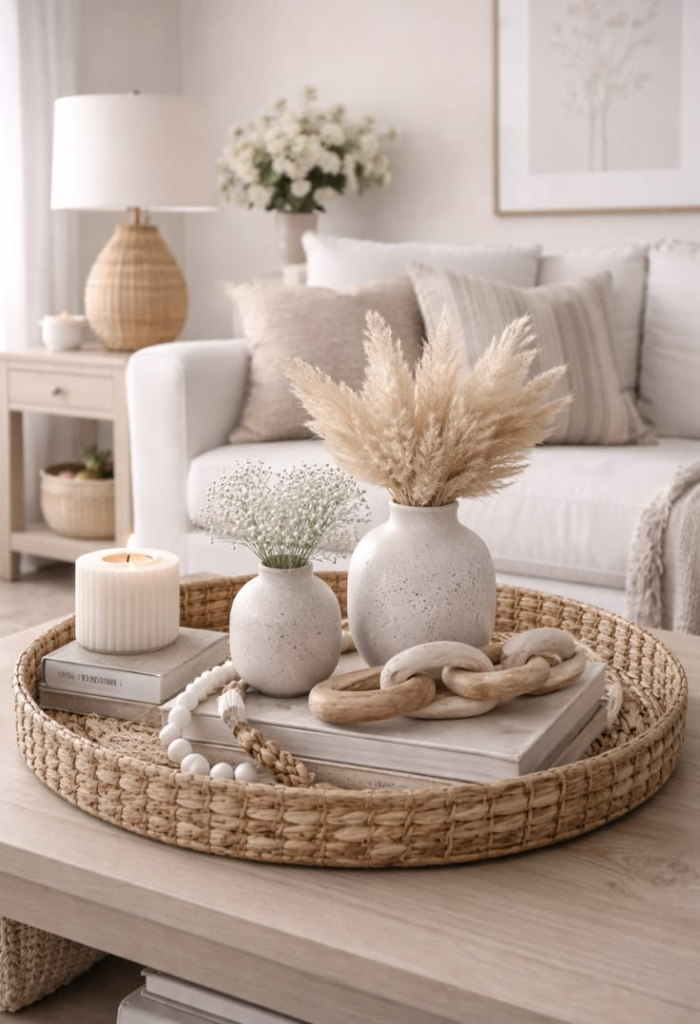
A light wood tray or bowl paired with simple white or cream ceramic pieces keeps the whole styling arrangement in the airy, sun-bleached palette coastal interiors tend to favor, avoiding darker tones that can read as more traditional or industrial instead.
Industrial Coffee Table Styling
Industrial styling favors raw materials, darker tones, and a slightly more utilitarian feel, which changes the object choices meaningfully from the lighter aesthetics above.
16. The Reclaimed Wood Tray With Metal Accents
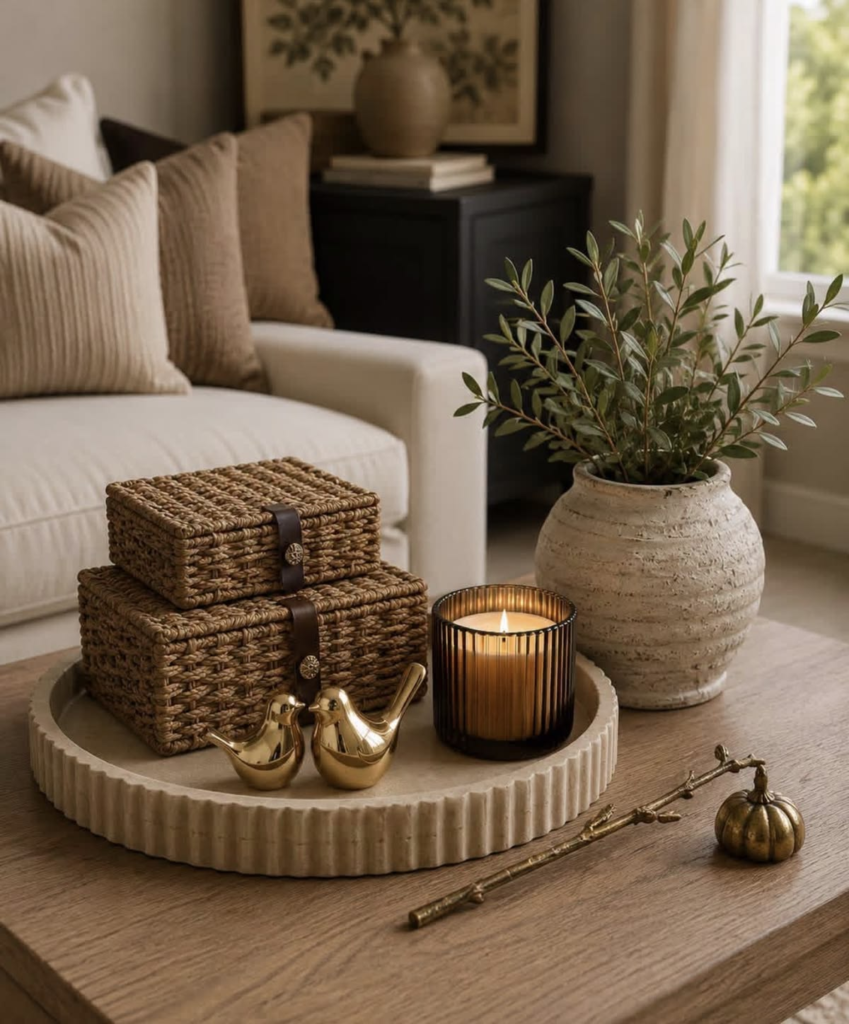
A tray made from reclaimed or distressed wood, paired with a metal candle holder or a small metal sculptural object, leans into the raw, slightly weathered material palette industrial styling relies on. The distressed, imperfect quality of the wood is doing real aesthetic work here, so a smooth, polished wood tray would actually undercut the look rather than support it.
17. The Vintage Toolbox or Crate as a Styling Base
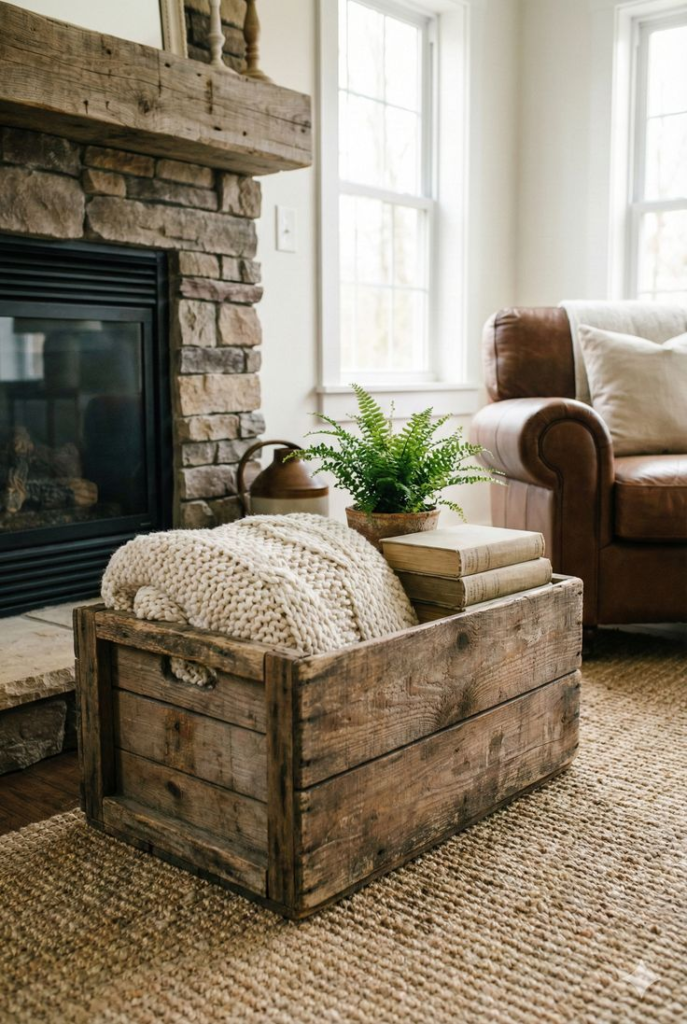
Using a small vintage metal toolbox or a wooden crate as the base “tray” for other objects — rather than a traditional flat tray — adds an authentic industrial element that also functions as real storage if it has a lid or drawer. This is one of the more distinctive styling choices on this list since it uses a genuinely functional vintage object rather than a decor piece made to look industrial.
18. The Dark Leather-Bound Book and Metal Object Mix
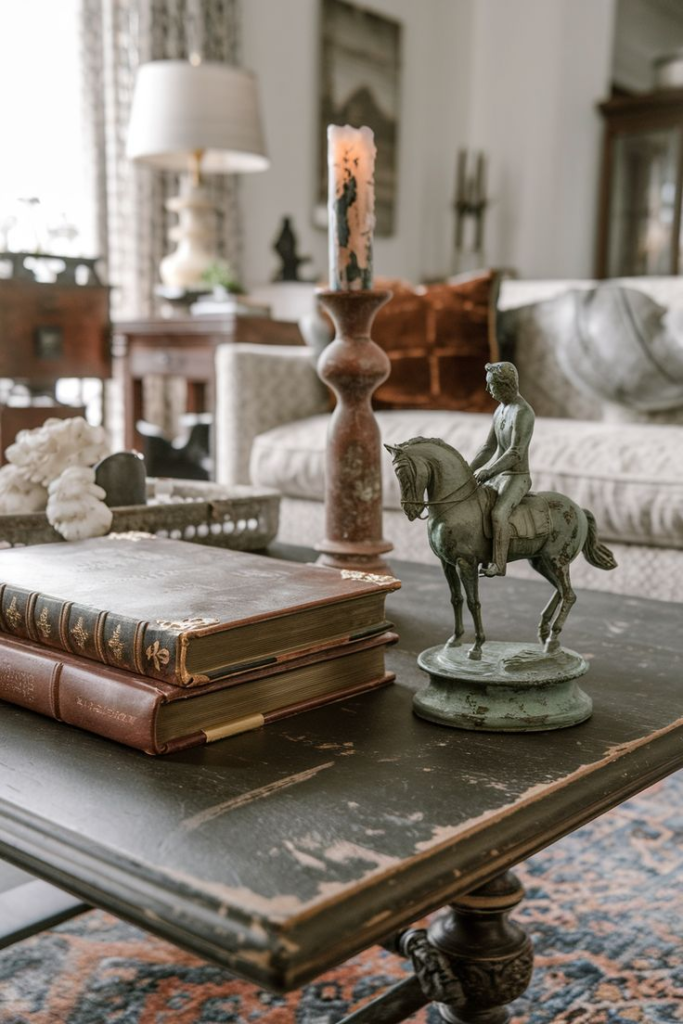
Dark leather-bound books, stacked and topped with a raw metal or concrete object, keeps the color palette consistent with the darker tones industrial interiors tend to favor, while still using the classic book-stack styling trick that works across most aesthetics.
19. The Exposed Bulb or Edison-Style Candle Lantern
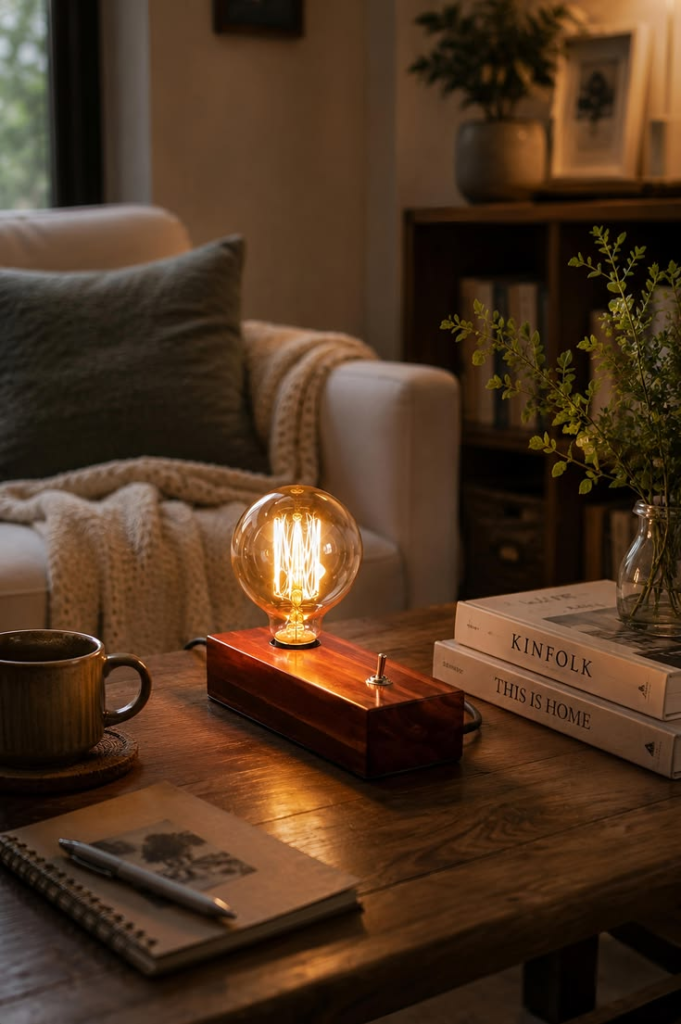
A small lantern-style candle holder with an exposed, Edison-bulb-inspired candle shape adds a specific industrial lighting reference even in a small tabletop object, tying the styling into the exposed-bulb fixtures industrial interiors often feature elsewhere in the room.
Scandinavian Coffee Table Styling
Scandinavian styling shares some minimalist restraint but adds more warmth through natural materials and texture than a strict minimalist approach would.
20. The Light Wood Bowl With a Single Plant
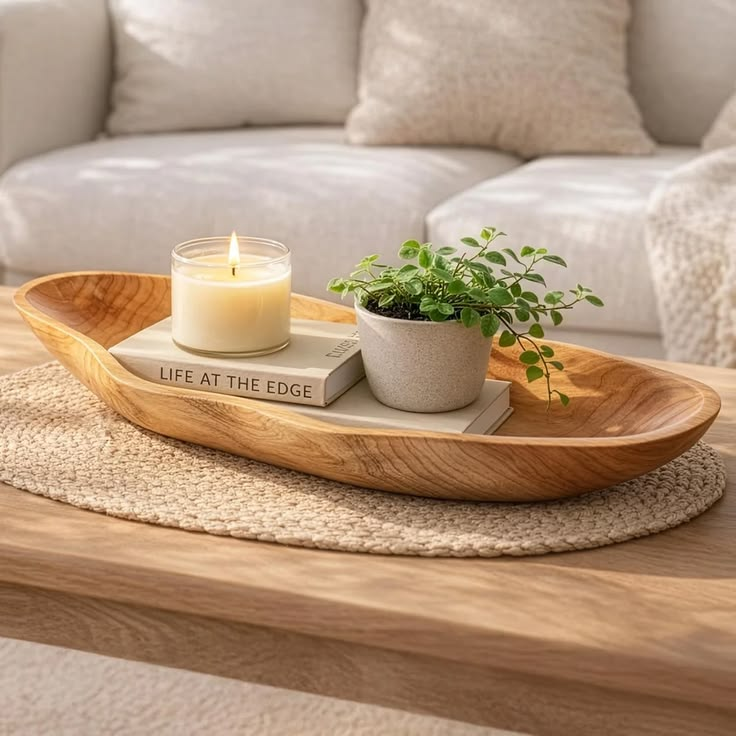
A simple light wood or pale ceramic bowl holding one small plant, without additional objects crowding the surface, captures the “cozy but uncluttered” balance Scandinavian styling is known for. This is a good starting point if you’re new to this aesthetic specifically, since it requires very few pieces to execute well.
21. The Wool or Knit Textile Base
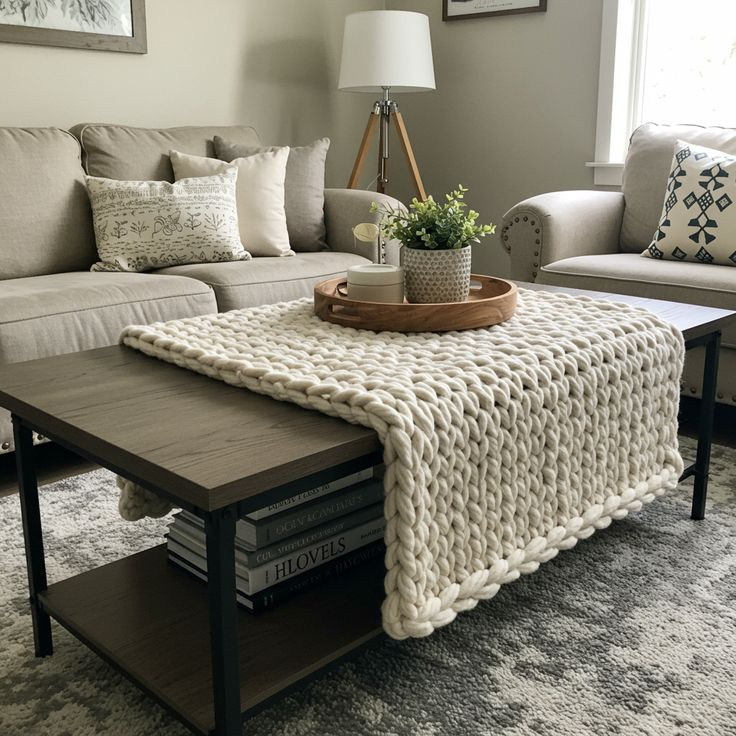
A small knit or wool textile placed under one or two objects adds warmth and texture in the understated way Scandinavian interiors favor, without the busier, more layered look boho textiles create with similar materials.
22. The Candle-Focused Minimal Setup
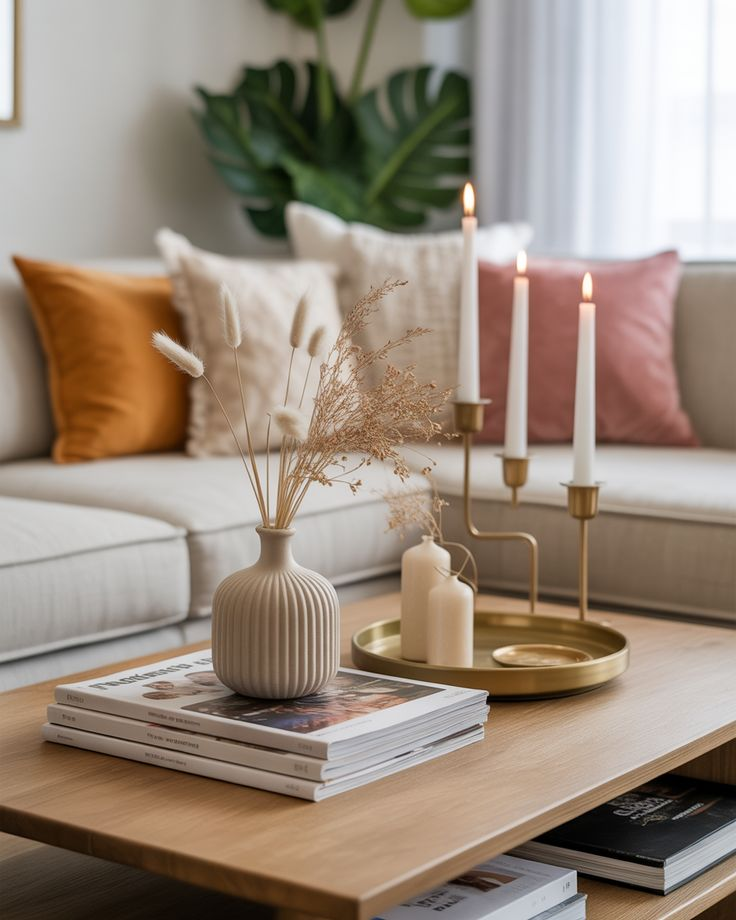
A cluster of two or three simple, unscented or lightly scented candles in matte ceramic holders, grouped together rather than spread across the table, leans into the hygge-adjacent coziness Scandinavian styling is often associated with, and it’s a genuinely functional styling choice since you’ll actually light and use these rather than just display them.
Functional Styling Elements That Work Across Every Aesthetic
Regardless of which aesthetic you’re going for, a few functional considerations apply to every coffee table styling setup and are worth planning for before you buy decor.
23. The Hidden Storage Solution
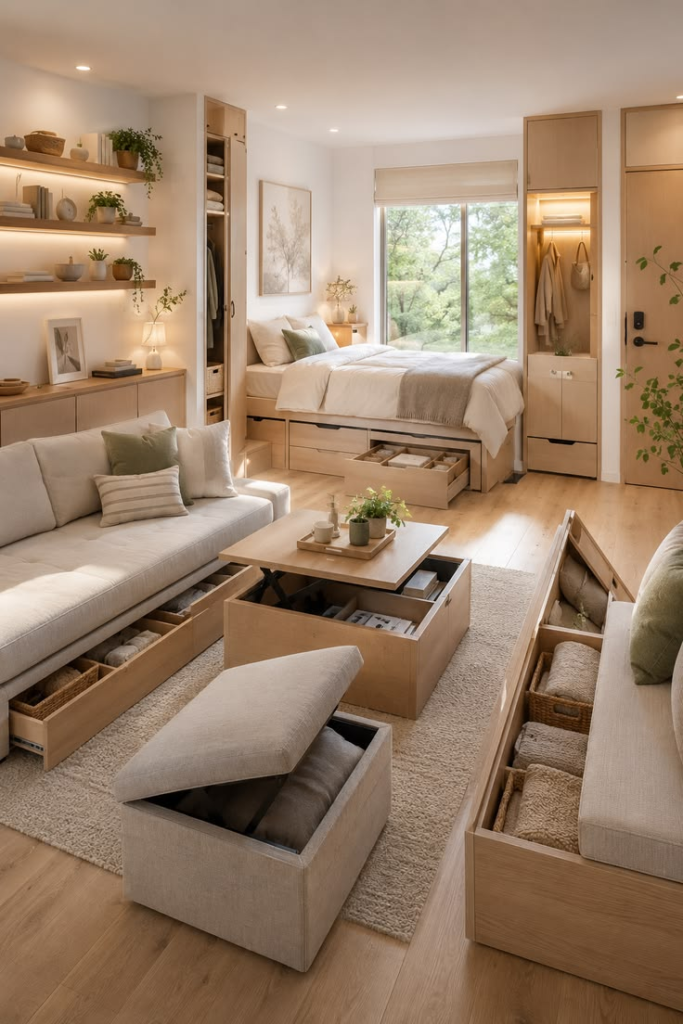
A coffee table with a lower shelf, a lift-top storage compartment, or ottomans used alongside it for extra storage lets you actually clear the surface for real use (game night, a laptop, food) while having somewhere immediate to stash the remote or coasters rather than leaving them cluttering the styled surface. This is the single functional upgrade I’d prioritize if your current table has zero storage, since it solves the “styled table versus livable table” tension directly.
24. The Coaster and Remote Integration
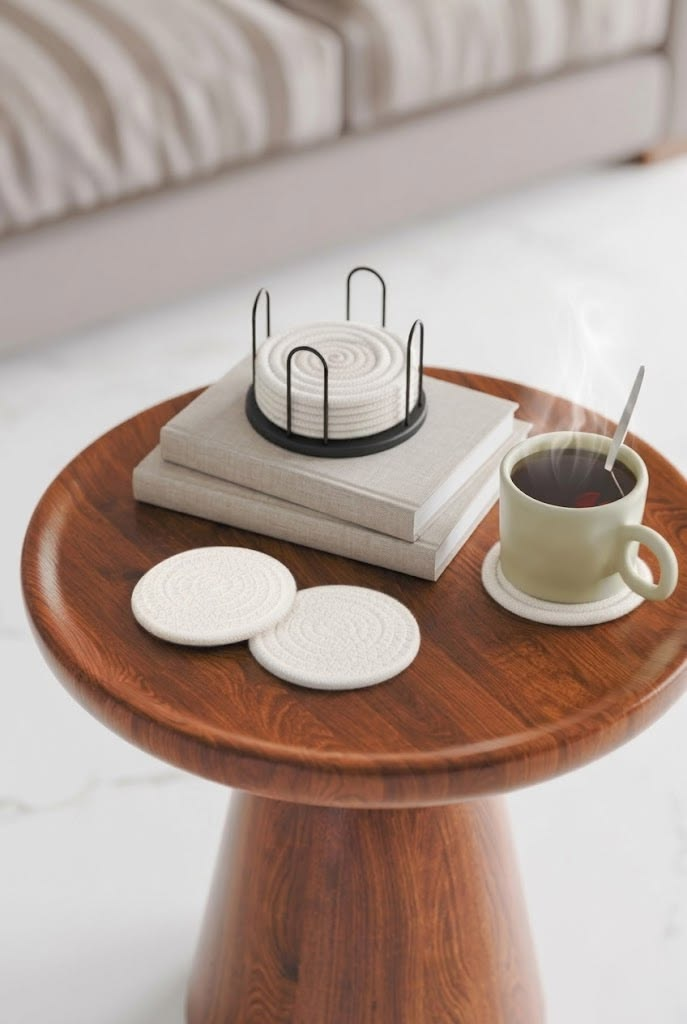
Rather than hiding coasters and remotes away entirely, incorporating them into the styling itself — a small dish specifically for coasters, a textured box sized to hold the remote — means the functional items are part of the design rather than something you’re scrambling to find or hide when guests come over. A reader once mentioned in a comment that she started using a small vintage ashtray (never used for its original purpose) specifically as a coaster catch-all, which is a good reminder that functional pieces don’t need to be purpose-bought for this exact job.
25. The Seasonal Rotation System
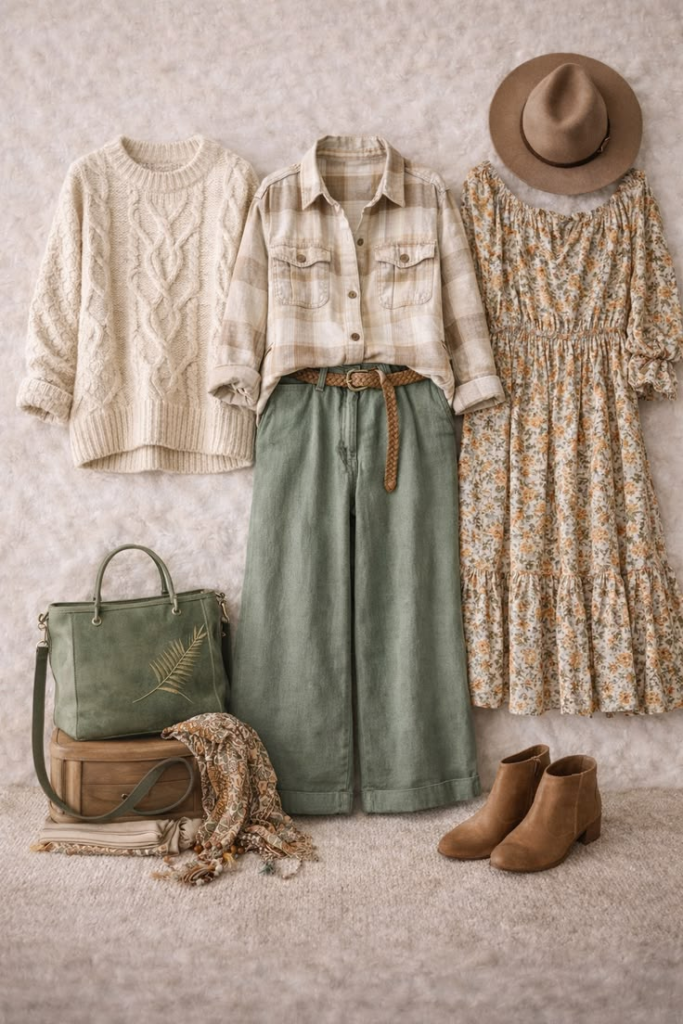
Keeping a small rotating set of seasonal elements — a bowl of pinecones or a candle in fall, fresh flowers or citrus in spring and summer — on hand means you can refresh the table’s look every few months without buying an entirely new set of decor each season. This is a genuinely cost-effective habit since you’re really just rotating what’s already in a box in your closet rather than shopping for new styling pieces constantly.
Pro tip: Whatever your aesthetic, leave at least a third of the table’s surface area genuinely clear for actual use — a drink, a plate, a laptop — rather than styling every available inch. A fully covered table looks great in photos and gets shoved to the side of the room within a week in real life, which defeats the point of styling it in the first place.
What Coffee Table Styling Actually Costs
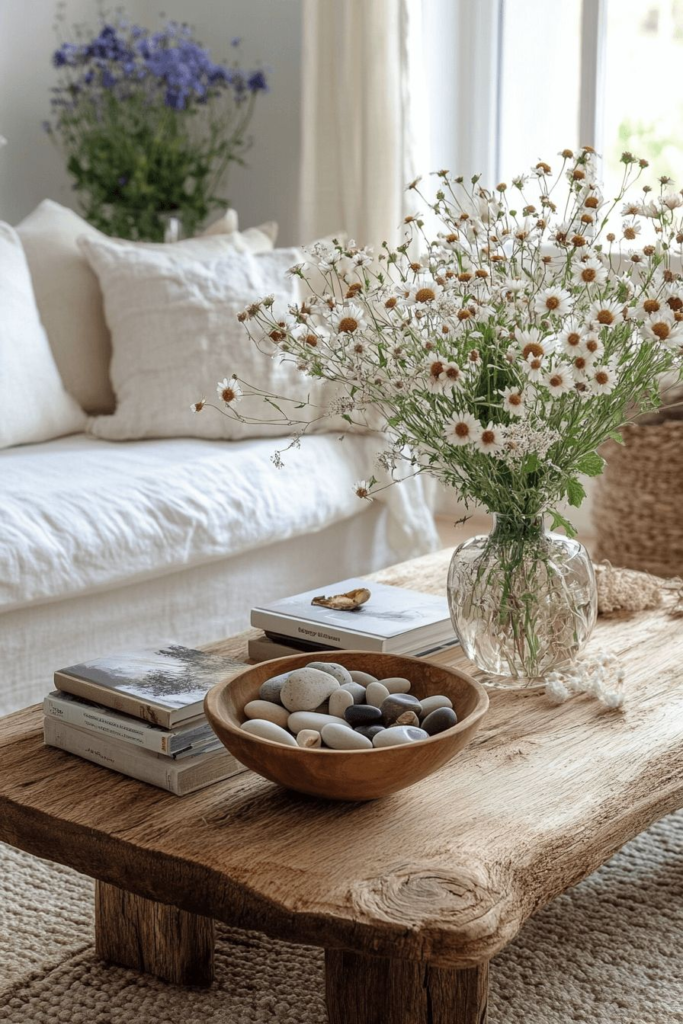
You can put together a genuinely well-styled coffee table for $30–60 using a tray, a candle, and one or two secondhand or thrifted objects, which is honestly where I’d start regardless of aesthetic before spending more. A more built-out styling setup — multiple coordinated objects, a nicer tray, fresh flowers on a recurring basis — tends to run $80–150 depending on the materials (rattan and ceramic cost less than brass or marble accents), and ongoing costs like fresh flowers or seasonal rotation items add a small recurring expense on top of the initial setup if you keep those elements up over time.
Where I’d Start
If I were styling a coffee table from scratch again, I’d start with one good tray in whatever material fits my aesthetic, then add just two or three objects and live with that for a couple of weeks before adding anything else — it’s the fastest way to figure out whether the styling actually survives real use in your living room, not just a first photo. Everything else on this list is worth layering in over time as you find pieces you genuinely like, but starting minimal and letting the table earn more objects as you go beats buying a whole styled set at once and hoping it fits how you actually live with the space.


Leave a Reply